
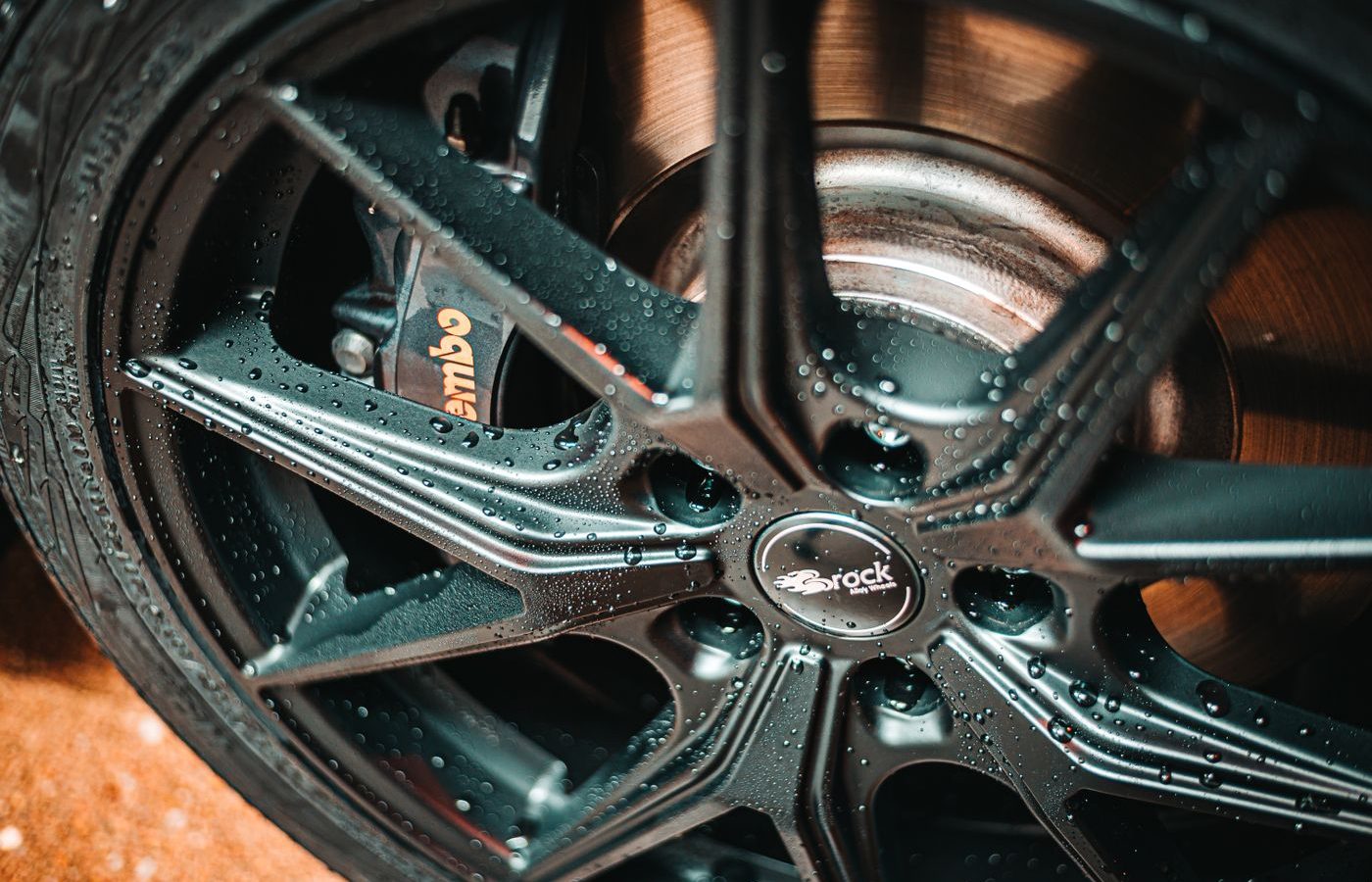
A standard passenger car has two axles — one connecting the front wheels, one connecting the rear wheels. That’s true for essentially every sedan, coupe, hatchback, crossover, SUV, and pickup on the road, regardless of whether it’s front-wheel drive, rear-wheel drive, or all-wheel drive.
The simple rule: count the pairs of wheels. Two pairs means two axles. The question usually comes up at a toll plaza, when renting a trailer, or after a curb strike that knocked the alignment out — so here’s what the answer actually affects.
Key Takeaways
- Nearly every passenger vehicle has 2 axles and 4 wheels, whether it’s a compact car or a full-size SUV.
- Axle count goes up with vehicle size: box trucks run 2-3 and tractor-trailers commonly 5. Note that a dually pickup still has only 2 axles despite having 6 wheels.
- Toll roads price by axle count, and your trailer’s axles count too — towing turns your 2-axle car into a 3- or 4-axle toll vehicle.
- A bent axle or damaged CV joint after a collision or hard curb strike will cause vibration, clicking on turns, and uneven tire wear.
What Is an Axle, Exactly?
An axle is the shaft or assembly that connects a pair of wheels, supports the vehicle’s weight, and — on driven wheels — transfers power from the engine or electric motor to the road (Edmunds).
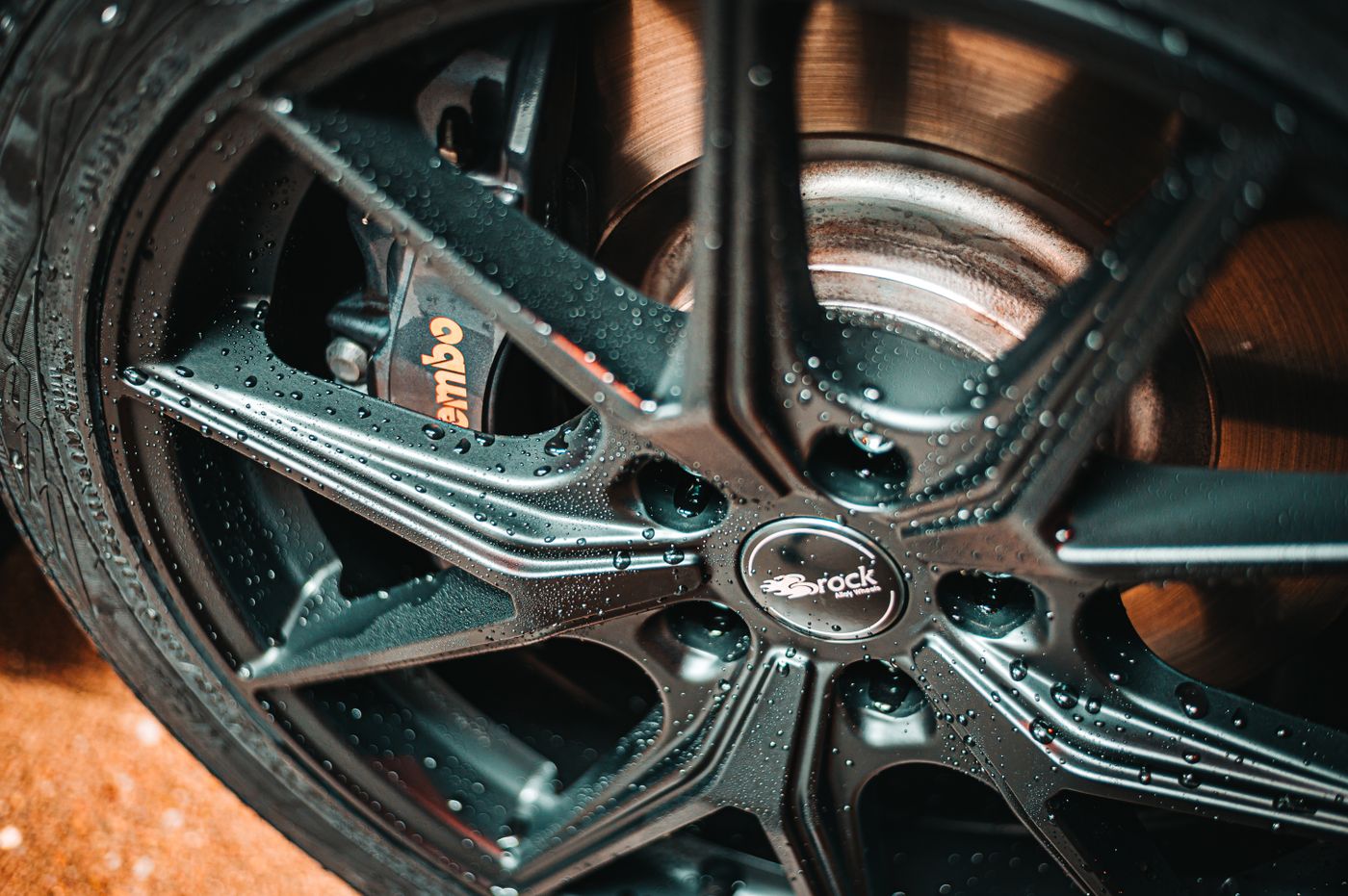
On a modern car, “axle” rarely means a single solid bar running wall-to-wall under the vehicle. Most passenger cars use independent suspension, where each wheel moves separately and power reaches it through a half-shaft with constant-velocity (CV) joints at each end. Functionally, the pair of half-shafts on one end of the car is still counted as one axle.
That’s why the count doesn’t change with drivetrain. A front-wheel-drive car has two axles — the front one is driven, the rear one just carries weight and rolls. An all-wheel-drive car still has two axles; both are simply driven.
How Many Axles Do Different Vehicles Have?
| Vehicle type | Axles | Wheels |
|---|---|---|
| Motorcycle | 2 | 2 |
| Sedan, coupe, hatchback | 2 | 4 |
| SUV, crossover, minivan | 2 | 4 |
| Half-ton pickup (F-150, Silverado 1500) | 2 | 4 |
| Dually pickup (F-350 DRW) | 2 | 6 |
| Box truck / small delivery truck | 2-3 | 4-10 |
| Tractor-trailer (18-wheeler) | 5 | 18 |
Notice the dually: six wheels, but still two axles. The rear axle simply carries two wheels on each side for load capacity. This is the single most common point of confusion — people count wheels and divide by two, which breaks as soon as a vehicle has paired rear wheels.
Why Does Axle Count Matter?
Three practical situations, in rough order of how often they come up.
Tolls. Most toll authorities price by axle count because it correlates with size and road wear. Locally, the South Bay Expressway (SR-125) classifies vehicles this way, and so do toll facilities across the country. A 2-axle vehicle pays the base passenger rate. Critically, every axle in your combination counts — if you’re towing a single-axle utility trailer, you’re a 3-axle vehicle at the booth; a tandem-axle trailer makes you a 4-axle vehicle (TollGuru). Many drivers get billed at the higher rate and don’t realize why. Check the specific toll operator’s schedule before assuming, since classification rules vary.
Towing and load ratings. Axle count is tied to how weight is distributed and how much a vehicle can legally carry. It’s why a dually rates a far higher payload than the same truck with single rear wheels, and why bridge weight limits are written in terms of axle spacing rather than total weight alone.
Repair and alignment. When a shop quotes an alignment, “four-wheel alignment” means both axles are being adjusted. On some solid-rear-axle vehicles only the front is adjustable, and you’ll be quoted a front-end alignment instead.
Signs of Axle or CV Joint Damage
Axles are durable, but they’re also low on the vehicle and directly exposed to curbs, potholes, and collision forces. Watch for these:
- Clicking or popping when turning — the classic symptom of a worn or damaged outer CV joint. It gets louder in tight, slow turns.
- Vibration that changes with speed — a bent shaft or damaged bearing typically produces a vibration that grows as you accelerate.
- Grease sprayed inside the wheel well — a torn CV boot slings grease outward. Left alone, the joint runs dry and fails.
- Uneven or rapid tire wear — a bent axle or knocked-out alignment scrubs tread off one edge of the tire.
- A clunk when shifting into drive or reverse — excessive play in the axle or differential.
None of these fix themselves. A torn CV boot caught early is an inexpensive repair; the same joint left to run dry for months becomes a full axle replacement.
What Axle Damage Looks Like After a Collision
A hard hit to a wheel — a curb strike at speed, a pothole, or an impact in an accident — transmits force straight up the axle and into the suspension and subframe. The visible body damage is often the smaller half of the problem.
After that kind of impact, a proper inspection checks axle shaft straightness, CV boot integrity, wheel bearing play, control arm and knuckle condition, and whether the subframe itself has shifted. A car that “drives fine” but pulls slightly, wanders on the freeway, or chews through one front tire is usually telling you something underneath moved.
This is why post-collision alignment is a standard step in a complete repair rather than an upsell. If the frame or subframe is out of spec, replacing bent parts alone won’t make the car track straight. Our collision repair services include structural measurement and alignment as part of the repair, not as a separate afterthought.
Frequently Asked Questions
How many axles does an SUV have?
Two — the same as a sedan. SUVs are larger and heavier, but they still have one front axle and one rear axle carrying four wheels total. Three-row SUVs and full-size body-on-frame models are no exception.
Does a 4×4 or AWD vehicle have more axles?
No. Four-wheel drive and all-wheel drive change which axles receive power, not how many there are. A 4×4 pickup has two axles, both of them driven. The transfer case that splits power between them is a separate component, not a third axle.
How many axles does a dually pickup have?
Two. A dual-rear-wheel truck has six wheels — two front, four rear — but the four rear wheels are mounted in pairs on a single rear axle. Toll systems generally classify by axle count, though some also factor in wheel count or weight.
Do I count my trailer’s axles for tolls?
Yes. Toll classification uses the total axle count of the combination. Your 2-axle car pulling a single-axle trailer is billed as a 3-axle vehicle, and a tandem-axle trailer makes it 4 (TollGuru).
Can you drive with a bent axle?
You shouldn’t. A bent axle puts continuous load on the wheel bearing, CV joints, and differential, and it can fail without much warning. If a wheel separates or a joint lets go at speed, you lose control. Have it inspected before driving further.
The Bottom Line
Your car has two axles. So does your SUV, your minivan, and your pickup — even the dually, despite its six wheels. Count wheel pairs, not wheels, and remember that trailers add to the total when you’re figuring tolls.
If a curb, pothole, or collision has left your car vibrating, clicking in turns, or wearing tires unevenly, that’s worth having inspected before it becomes a bearing or differential job. Contact San Diego Bumper and Collision for an estimate.