
A Smart Fortwo weighs between roughly 1,550 and 2,400 pounds, depending on generation and powertrain. The original 1998-2007 model was the lightest at around 1,550-1,650 lbs. Later gas models climbed to about 1,800-2,100 lbs, and the electric Smart EQ Fortwo is the heaviest at roughly 2,360-2,400 lbs.
For context, the average new vehicle sold in the U.S. weighs 4,354 pounds — so even the heaviest Smart is barely half the weight of a typical new car.
Key Takeaways
- Smart Fortwo curb weight spans about 1,550-2,400 lbs across all generations, versus 4,354 lbs for the average new U.S. vehicle (EPA Automotive Trends Report, model year 2024 final data).
- The first-generation 450 series was lightest at roughly 1,550-1,650 lbs.
- The electric Smart EQ is the heaviest version at around 2,360-2,400 lbs — the battery pack adds several hundred pounds.
- Low mass is efficient but changes crash physics: in a collision with a heavier vehicle, the lighter car absorbs more of the energy change.
How Much Does a Smart Car Weigh by Generation?
Smart Fortwo weight climbed steadily across three generations as safety structure, equipment, and eventually batteries were added.
| Generation | Years | Approx. curb weight |
|---|---|---|
| First gen (450 series) | 1998-2007 | 1,550-1,650 lbs |
| Second gen (451 series, gas) | 2008-2015 | 1,800-1,900 lbs |
| Third gen (453 series, gas) | 2016-2019 | 1,984-2,094 lbs |
| Smart EQ Fortwo (electric) | 2017-2019 in the U.S. | ~2,360-2,400 lbs |
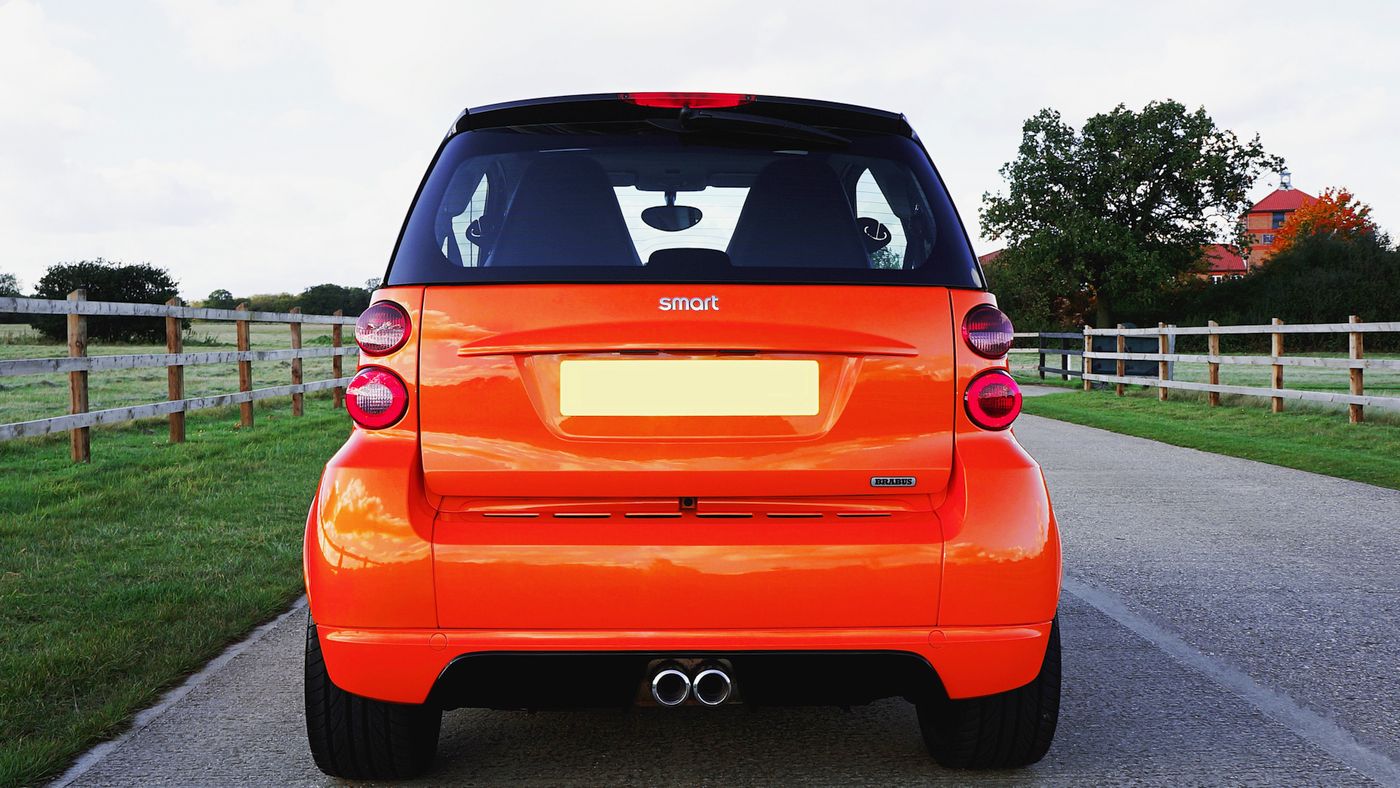
Trim level shifts these numbers by 50-150 lbs. A cabrio (convertible) carries extra structural reinforcement to compensate for the missing roof, and a Brabus-tuned model adds equipment weight over a base car. Electric-drive versions of the 451 generation also ran heavier than their gas equivalents. Figures compiled from published curb-weight specifications (Autopadre Smart Fortwo curb weight data; EV Specifications, Smart EQ Fortwo); Smart sold the EQ in Europe through 2024, but the U.S. market ended after 2019.
Why Did the Smart Car Get Heavier Over Time?
Three things drove the gain, and none of them are unique to Smart.
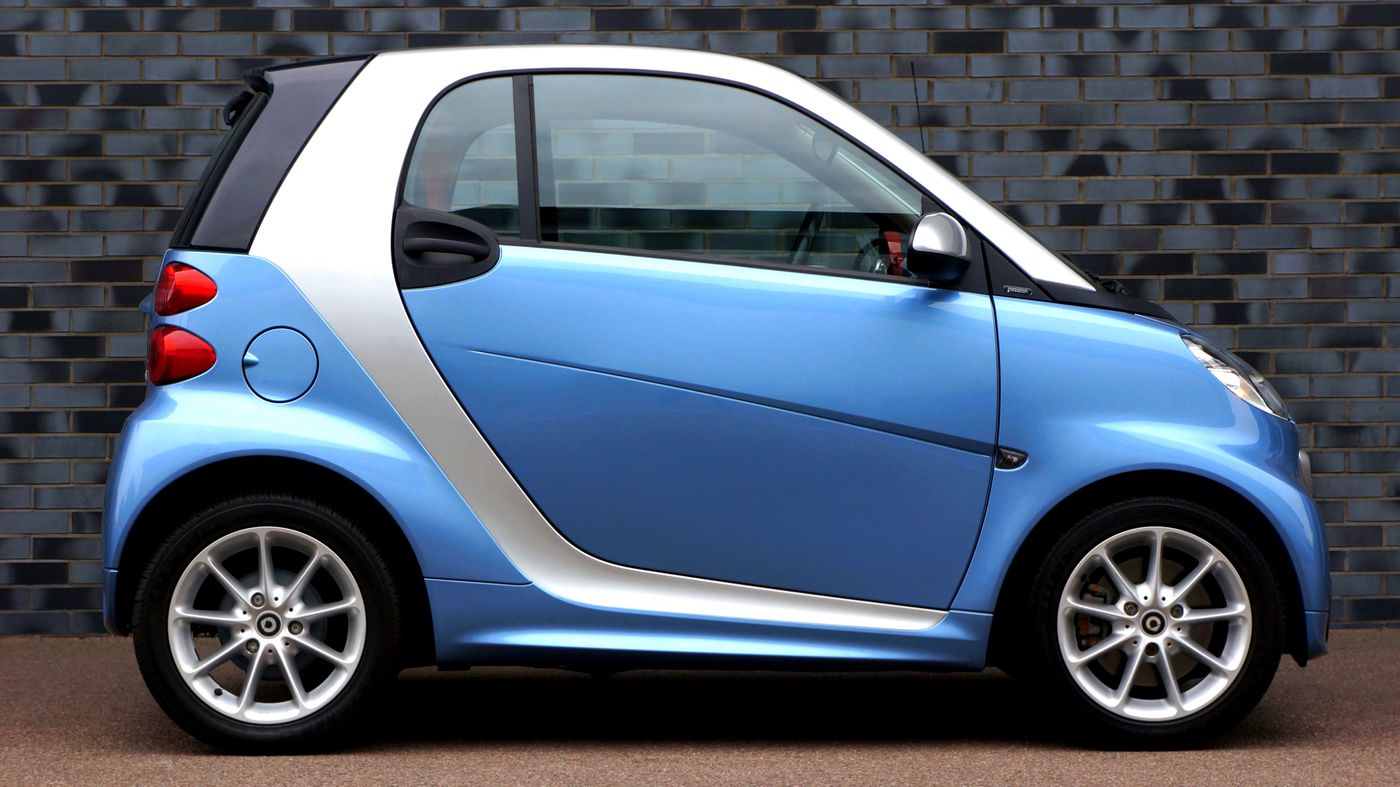
Safety structure. The Smart’s Tridion safety cell — the visible contrasting-color frame around the passenger compartment — got stronger with each redesign. Side-impact protection, additional airbags, and stiffer door beams all add mass.
Equipment. The 1998 original was genuinely spartan. Later cars added air conditioning, infotainment, power accessories, stability control, and backup cameras as regulations and buyer expectations changed.
Batteries. The Smart EQ carries a lithium-ion pack that adds several hundred pounds over the equivalent gas car. That’s the single biggest jump in the table above, and it’s the same tradeoff every EV makes.
Across the gas models alone, the Fortwo gained roughly 440 lbs from first generation to last — about 780 lbs if you count the electric EQ. That’s a steeper proportional gain than the market at large: EPA has tracked average new-vehicle weight since 1975, when it stood at 4,060 lbs, and it reached 4,354 lbs for model year 2024 (EPA Automotive Trends Report). The comparison flatters the market, though — average weight actually dipped well below the 1975 figure through the 1980s before SUVs and trucks pushed it back up. Either way, the gap between a Smart and a typical new vehicle never came close to closing.
What Low Weight Means in a Collision
Light weight is genuinely good for fuel economy, braking distance, and tire and brake wear. In a crash between two vehicles, though, physics is unsentimental: the lighter vehicle experiences the larger change in velocity, which means higher forces on its occupants.
The core issue is mismatch rather than the Smart’s own engineering. A 2,000-lb car meeting a 5,500-lb pickup is a fundamentally different event than two similar-sized cars colliding, and no amount of structural design fully cancels a nearly 3-to-1 weight ratio. If you want specific crash performance for a given model year, check the ratings directly at IIHS or NHTSA rather than relying on general claims.
Practical consequences for owners:
- Repair thresholds arrive sooner. With less crush structure between the bumper and the cabin, a moderate impact is more likely to reach structural components rather than stopping at cosmetic panels.
- The Tridion cell is not a bolt-on part. Damage to the safety cell is structural repair territory and requires measurement against factory specifications.
- Parts availability matters. Smart exited the U.S. market after 2019, which can lengthen sourcing time for body panels and trim on later cars.
If your Smart has been in a collision, the honest first question is whether the damage stopped at the panels or reached the safety cell — and that’s determined by measurement, not by looking at it. We handle structural and collision repair with factory-spec measurement for exactly this reason.
Frequently Asked Questions
How much does a Smart car weigh in kilograms?
Roughly 700 to 1,090 kg, depending on generation. The first-generation 450 sits near 700-750 kg, later gas models around 820-950 kg, and the electric Smart EQ near 1,070-1,090 kg.
Does a Smart car weigh less than a motorcycle-based vehicle or a Miata?
It weighs considerably less than a Miata — roughly 1,600-2,100 lbs for a gas Fortwo versus about 2,366 lbs for a current MX-5. Against heavier touring motorcycles the gap narrows, but a Smart is still a full car with a steel safety cell, four wheels, and crash structure a bike doesn’t have.
Is a Smart car the lightest car sold in the U.S.?
It was among the lightest of its era. The first-generation Fortwo at roughly 1,600 lbs undercut essentially everything else on the U.S. market. Nothing sold today approaches it — the lightest new car currently available in the U.S., the Mazda MX-5 Miata, starts around 2,366 lbs, still some 750 lbs heavier than a first-generation Smart.
Why is the electric Smart heavier than the gas version?
The lithium-ion battery pack. An EV battery sized for usable range weighs several hundred pounds on its own, and the structure that protects and mounts it adds more. Removing the engine, transmission, and fuel tank recovers some of that, but not all of it.
Does the Smart’s low weight make it unsafe?
It makes crash outcomes more dependent on what you hit. In a collision with a much heavier vehicle, the lighter car takes the larger velocity change — a physics constraint no amount of engineering fully eliminates. For crash-test results on a specific model year, check IIHS or NHTSA directly.
The Bottom Line
A Smart Fortwo weighs somewhere between 1,550 and 2,400 pounds — light enough that even the heaviest electric version comes in at just over half the weight of the average new U.S. vehicle. The gain over time came from safety structure, added equipment, and finally the battery pack.
If you own one and it’s been hit, get the structure measured rather than assuming panel damage is the whole story. Contact San Diego Bumper and Collision for an inspection and estimate.