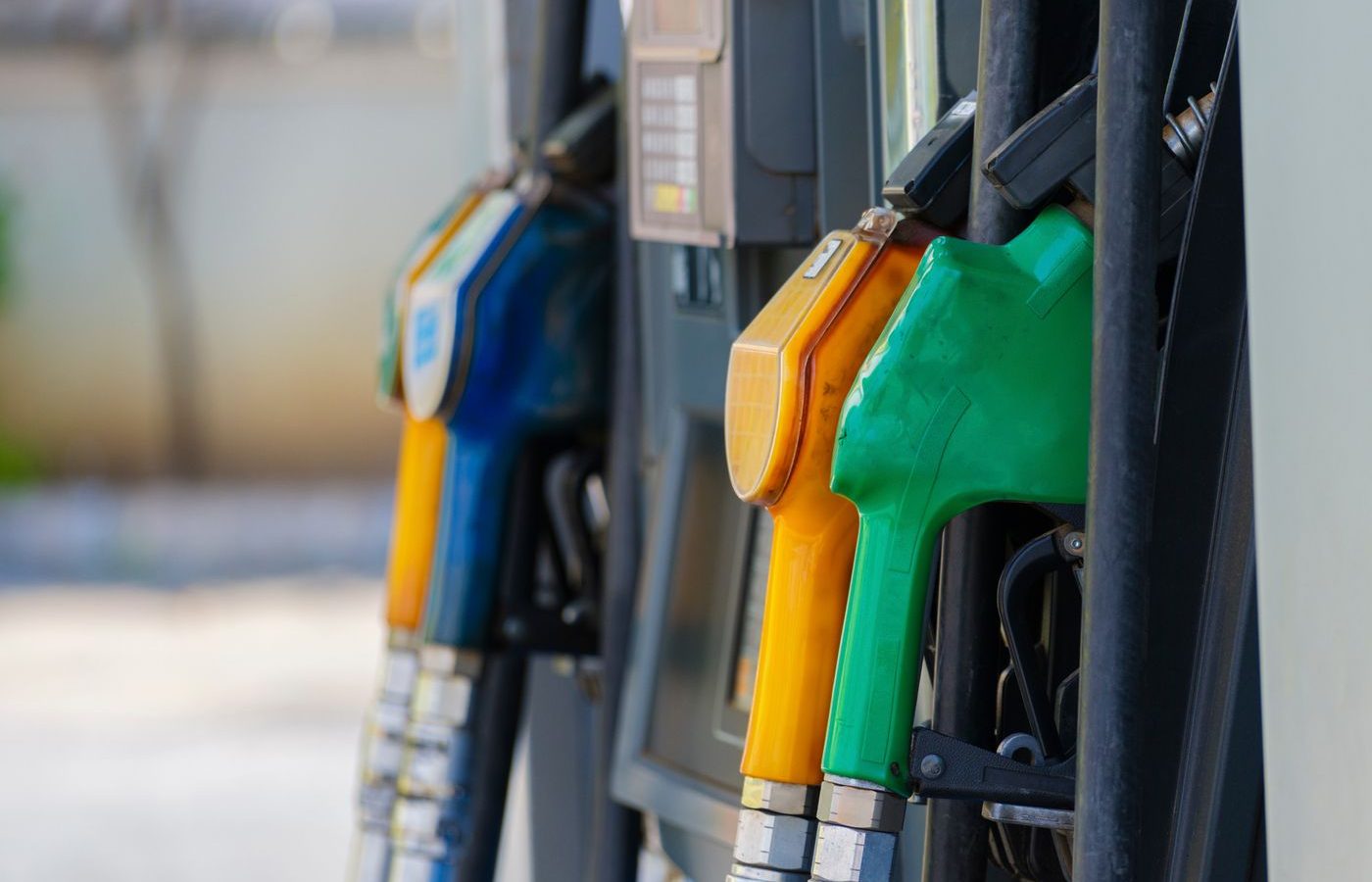
A gallon of gasoline weighs about 6.1 pounds — roughly 2.8 kilograms. The figure isn’t fixed, though. Depending on grade, ethanol content, and temperature, a U.S. gallon of gasoline runs somewhere between about 5.9 and 6.4 pounds.
For comparison, a gallon of water weighs 8.34 pounds and a gallon of diesel weighs about 7.1 pounds. Gasoline is the lightest of the three, which is exactly why it floats on water.
Key Takeaways
- A gallon of gasoline weighs approximately 6.1 lbs (2.8 kg), with a practical range of about 5.9-6.4 lbs.
- Diesel is heavier at roughly 7.1 lbs per gallon; water is heaviest at 8.34 lbs per gallon.
- Gasoline expands when warm and contracts when cold, so a gallon pumped on a hot afternoon weighs slightly less than the same gallon pumped at dawn.
- A full 15-gallon tank adds roughly 92 lbs to your car — about the weight of an extra passenger.
Why Isn’t There One Exact Number?
Gasoline isn’t a single compound. It’s a blend of hydrocarbons plus detergents, dyes, and — in most of the U.S. — up to 10% ethanol. Refiners adjust that blend seasonally and regionally, so density varies from batch to batch.

The arithmetic is straightforward once you know the density. Gasoline runs about 0.71 to 0.77 kg per liter. At the middle of that range, 0.74 kg/L × 3.785 liters per U.S. gallon works out to 2.80 kg, or 6.17 lbs. The ends of the density range give you the 5.9-6.4 lb spread.
Three factors move the number within that range:
Grade. Premium blends tend to run marginally denser than regular because of the aromatic compounds used to raise octane. The difference is small — a fraction of a pound per gallon — and it has no practical effect on your vehicle.
Temperature. Gasoline expands as it warms. A gallon measured at 90°F contains slightly less mass than a gallon measured at 40°F, because the volume is the same but the fuel is less dense.
Ethanol content. Ethanol is denser than gasoline, so higher-ethanol blends like E85 weigh more per gallon than the E10 sold at most U.S. pumps.
Temperature variation is also why wholesale fuel in the U.S. is measured in net gallons, corrected to a standard 60°F, while the pump sells you gross gallons at whatever temperature the fuel happens to be. The industry corrects for the expansion; your local gas station doesn’t.
Gasoline vs. Diesel vs. Water
Diesel comes in roughly 15% heavier than gasoline per gallon, at a density around 0.84 kg/L. Its molecules are longer carbon chains packed more tightly together, which also explains why diesel carries more energy per gallon and why diesel engines get better mileage on the same volume of fuel.
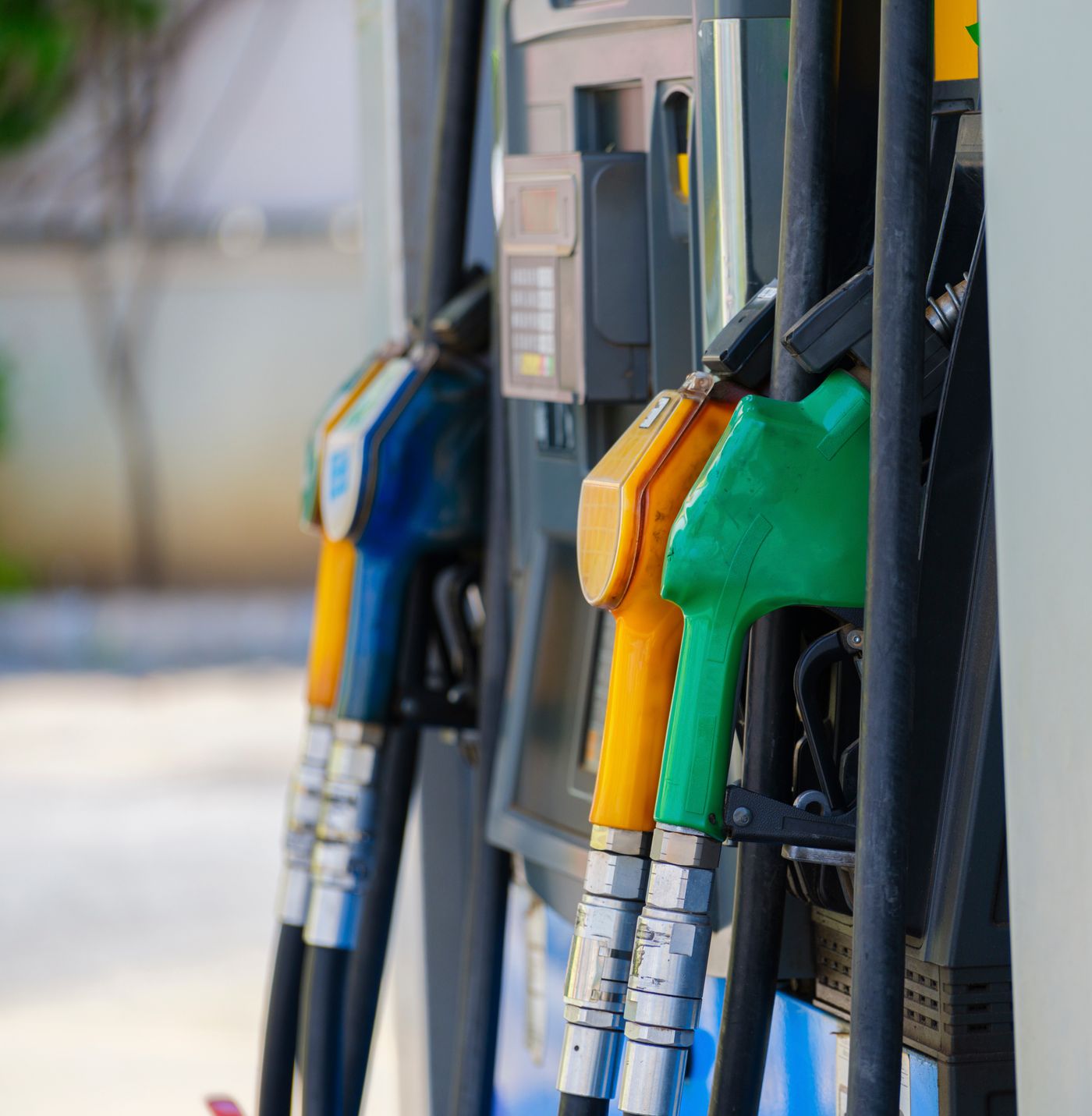
The gasoline-versus-water comparison isn’t just trivia. Because gasoline is lighter and doesn’t mix with water, it floats — which is precisely why you never put water on a gasoline fire. The water sinks, the burning fuel spreads across the surface, and the fire gets larger.
How Much Weight Does a Full Tank Add?
At 6.1 lbs per gallon, here’s what filling up actually adds to your vehicle:
| Tank size | Weight of full tank |
|---|---|
| 10 gallons (subcompact) | ~61 lbs |
| 13 gallons (compact) | ~79 lbs |
| 15 gallons (midsize sedan) | ~92 lbs |
| 19 gallons (midsize SUV) | ~116 lbs |
| 26 gallons (full-size pickup) | ~159 lbs |
| 36 gallons (extended-range pickup) | ~220 lbs |
A full midsize tank is about the weight of an extra passenger. A full extended-range pickup tank is closer to a passenger plus their luggage.
Does a Full Tank Actually Hurt Your Gas Mileage?
Technically yes, negligibly in practice. Extra mass takes more energy to accelerate, so a full tank costs a fraction of a percent in fuel economy compared to a nearly empty one.
The trade isn’t worth chasing. Running your tank low to save weight means more trips to the station and more time idling in line, and technicians commonly warn that habitually running near empty is hard on an in-tank fuel pump that relies on submerged fuel for cooling — though the evidence on modern returnless systems is mixed. Either way, the fuel you’d save is worth pennies.
Where weight reduction genuinely shows up in fuel economy is at a much larger scale. EPA’s 2025 Automotive Trends Report puts average new-vehicle weight at 4,354 pounds for model year 2024, based on final data (EPA Automotive Trends Report). Against that baseline, 90 pounds of fuel is about 2% of the vehicle’s mass — real, but not something you can feel or meaningfully manage.
If you want to reduce weight, empty the trunk. Most people are carrying more dead weight in cargo than in fuel.
Frequently Asked Questions
How much does a gallon of gas weigh in kilograms?
About 2.8 kg. Converting 6.1 pounds gives 2.77 kg. Gasoline density typically runs 0.71-0.77 kg per liter, which works out to the same range.
Does premium gas weigh more than regular?
Slightly. The aromatic compounds used to raise octane are a bit denser than the rest of the blend, so premium runs marginally heavier per gallon. The difference is a fraction of a pound and has no practical effect on your car.
Why does gas weigh less in hot weather?
Gasoline expands as it warms, so the same volume contains less mass at higher temperatures. A gallon pumped on a hot afternoon holds marginally less fuel by weight than the same gallon pumped at dawn. It’s why wholesale fuel is measured in net gallons corrected to 60°F, while the pump sells gross gallons.
How much does a 5-gallon gas can weigh when full?
The fuel alone is about 30.5 lbs. Add roughly 3 lbs for a typical plastic jerry can and you’re carrying about 33-34 lbs total. Worth knowing before you lift one into a truck bed.
Is diesel heavier than gasoline?
Yes, by roughly 15%. Diesel runs about 7.1 lbs per gallon versus gasoline’s 6.1, reflecting densities of about 0.84 and 0.74 kg/L respectively. The denser molecular structure is also why diesel contains more energy per gallon.
The Bottom Line
Call it 6.1 pounds per gallon for gasoline and you’ll be right within a few percent every time. Diesel is about 7.1 lbs, water is 8.34 lbs. A full 15-gallon tank adds roughly 92 pounds to your car — noticeable on a scale, invisible in your fuel economy.
Curious how vehicle weight affects what happens in a collision? Our guide to Smart car weight and crash physics covers that in detail. And if your vehicle needs body or collision work, contact San Diego Bumper and Collision for a free estimate.