Paint a garage floor like a pro by clearing the space, degreasing and cleaning thoroughly, acid-etching the concrete to open its pores, filling any cracks, then applying epoxy primer and a top coat in small sections using an “M” or “W” rolling pattern — working from the back of the garage toward the front so you don’t paint yourself into a corner. Proper prep work is what actually separates a professional-looking result from a DIY job that peels within a year or two.
Here’s the full process, why prep matters more than the epoxy product itself, and how DIY compares to professional installation on both cost and durability.
Key Takeaways
- Acid etching before painting opens the concrete’s pores for proper epoxy adhesion — skipping it is the most common cause of early peeling.
- DIY epoxy kits cost $720-$1,800 for a typical two-car garage but only last 2-5 years.
- Professional installation costs $1,595-$3,337 but lasts 10-20 years, thanks to coating 5x thicker than DIY kits.
- Environmental conditions matter — apply on a warm, dry day under 70% humidity and above 50°F for the best result.
Step 1: Clear and Protect the Space
Remove everything from the floor first. If you plan on grinding as part of surface prep, tape off and cover walls and any areas you don’t want covered in concrete dust, since grinding produces a genuinely significant amount of fine particulate (Armor Garage).
Step 2: Clean, Degrease, and Etch
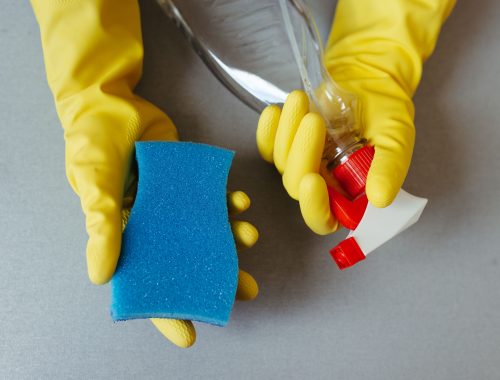
Sweep and mop the floor, then remove any grease stains by scrubbing with an oil and grease emulsifier — expect to spend a full first day on cleaning, degreasing, etching, scrubbing, vacuuming, and rinsing before you’re ready to even think about applying epoxy.
Acid etching removes the topmost layer of the concrete to create a more porous surface, which is what actually gives the epoxy something to properly bond with. Skipping this step is the single biggest reason DIY epoxy jobs peel prematurely — the coating simply never adhered to the concrete correctly in the first place (A1 Concrete).
Step 3: Fill Cracks and Let It Dry Completely
Fill any cracks or gaps using an epoxy concrete crack filler or repair product before coating — painting over unrepaired cracks just seals in a problem that will show through the finished surface. After a final rinse to clear remaining dust or debris, let the floor dry out completely before moving on to application.

Step 4: Apply Primer and Top Coat
Choose a warm, dry day for application — ideal conditions are under 70% humidity and no lower than 50°F, since epoxy cures unpredictably outside that range. Cut in the edges with a brush around walls, posts, and corners first, then roll the epoxy onto the floor in small sections using an “M” or “W” pattern, working from the back of the garage toward the front and overlapping each section slightly (Lowe’s).
Allow the first coat to dry 10-36 hours before applying a second coat if your product calls for it. Let the floor cure fully undisturbed — typically ready for foot traffic around 10 hours in, and safe for vehicle traffic around 36 hours in.
DIY vs. Professional: Cost and Durability
DIY epoxy flooring costs $2-$5 per square foot, with kits running $100-$500 depending on quality — a typical two-car garage lands around $720-$1,800 total. Professional installation costs $3-$12 per square foot including labor, averaging $2,441 nationally with a typical range of $1,595-$3,337 (Family Handyman).
The durability gap explains most of that price difference. DIY water-based kits typically last 2-5 years, and many begin peeling within just 1-3 years without expert-level prep work. Professional-grade 100% solids epoxy applies at 10-20 mils thick per coat — roughly five times thicker than a typical DIY water-based kit’s 2-4 mils — which translates directly into a 10-20 year lifespan with better resistance to peeling, fading, staining, and scratching.
Frequently Asked Questions
Do I need to grind the concrete, or is acid etching enough?
Acid etching is sufficient for many garage floors in reasonable condition. Grinding is typically reserved for floors with existing coatings that need to be fully removed, or concrete with significant surface damage that etching alone won’t adequately profile.
How long before I can park my car on a new epoxy floor?
Most epoxy systems are ready for light foot traffic around 10 hours after the final coat and safe for vehicle traffic around 36 hours, though full chemical cure can take up to a week — avoid heavy or sustained loads during that longer cure window if possible.
Can epoxy be applied over an old, existing coating?
Generally not recommended without proper prep — old coatings usually need to be ground off or thoroughly assessed for adhesion before new epoxy goes on top, since applying over a failing existing coating just accelerates the new coating’s failure too.
Does garage size affect the cost proportionally?
Mostly yes, since cost is largely driven by square footage — if you’re not sure what size garage you’re working with, our guide on 3-car garage dimensions gives a useful reference point for common garage sizes and their approximate square footage.
The Bottom Line
A professional-looking garage floor comes down to prep work more than the epoxy product itself — cleaning, degreasing, acid etching, and crack filling all matter more than which coating you buy. DIY runs $720-$1,800 for a two-car garage but typically lasts only 2-5 years, while professional installation costs more upfront ($1,595-$3,337) but delivers a coating 5x thicker that lasts 10-20 years.
Want your garage or driveway looking professionally finished? Contact San Diego Bumper and Collision for a quote — see also our car paint job cost guide if you’re tackling multiple projects at once.