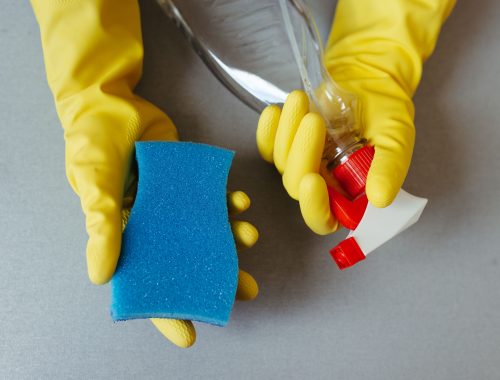

Clean car windows without streaks using an ammonia-free automotive glass cleaner and a two-towel technique: one microfiber towel does the actual cleaning, and a second, completely dry one buffs away residue. Wipe the outside glass in vertical (up-and-down) strokes and the inside in horizontal (side-to-side) strokes — that way, if a streak shows up later, you’ll instantly know which side it’s on.
Here’s the full technique, the products that actually work, and the environmental mistake that causes most streaking in the first place.
Key Takeaways
- Use two separate microfiber towels — one to clean, one completely dry to buff away leftover residue.
- Wipe outside glass vertically, inside glass horizontally — this lets you instantly identify which side a streak is on.
- Ammonia-free glass cleaners avoid the filmy residue that soaps, scents, and dyes in standard cleaners often leave behind.
- Clean in shade or during early morning/late afternoon — direct sunlight evaporates cleaner too fast, causing streaks.
The Two-Towel Technique
The core of streak-free window cleaning is using one high-quality microfiber towel to actually apply and work the cleaner, then a second, completely dry towel to buff away every last bit of residue (Mr. Shine Pickering). Using a single towel for both steps is one of the most common reasons DIY window cleaning ends up streaky — the towel becomes saturated with cleaner and residue, and dragging that same damp towel back over the glass just redistributes the film instead of removing it.
The Vertical/Horizontal Trick
Clean the outside of the glass with vertical, up-and-down motions and the inside with horizontal, side-to-side motions (Stoner Car Care). If you spot a stray streak from inside the car later, the direction tells you instantly whether it’s on the interior or exterior surface, saving you from re-cleaning both sides when only one actually needs it.
Wipe in straight, overlapping strokes from top to bottom, then follow with a second pass in the perpendicular direction — creating a crosshatch pattern that ensures full coverage and makes any missed spot immediately obvious (Panda Hub).
Choosing the Right Product

Ammonia-free automotive glass cleaners are worth seeking out specifically — ammonia-based household glass cleaners can damage tinted windows and often leave more residue behind than purpose-built automotive formulas. Products like Stoner Invisible Glass, CarPro Clarify, and Gyeon Glass are commonly recommended, with Invisible Glass independently lab-tested as 100% residue-free, skipping the soaps, scents, and dyes that leave a filmy layer on standard glass cleaners (Car Mechan). If you’re also dealing with wiper streaking rather than just glass residue, our guide on cleaning windshield wipers covers a related but distinct cause of visibility issues.
Towel choice matters as much as the cleaner itself — look for tight-woven, lint-free microfiber towels such as waffle weave, diamond weave, or corduroy styles, using one towel to apply the product and a separate, clean towel exclusively for buffing.
The Environmental Mistake Most People Make
Clean windows in a shaded area or when direct sunlight isn’t hitting the glass — sun exposure causes the cleaning solution to evaporate too quickly, which is one of the single biggest causes of streaking regardless of how good your technique or product is (The Mobile Buff). Early morning or late afternoon tends to offer the best combination of adequate light to see your work and cooler glass temperature that gives the cleaner time to actually work before evaporating.
Frequently Asked Questions
Can I use the same towel for the windows and the rest of the car’s paint?
It’s better to keep dedicated towels for glass — paint-cleaning towels can pick up wax or polish residue that transfers onto glass and causes streaking or a hazy film that’s genuinely hard to diagnose later.
Does newspaper actually work better than microfiber for glass?
It’s a popular older trick, and it can work in a pinch, but modern lint-free microfiber towels generally outperform newspaper for both streak-free results and avoiding ink transfer or scratching risk on tinted glass.
Why do my windows streak more in winter?
Cold glass causes cleaning solution to evaporate unevenly and can leave more visible residue, and cabin humidity from heater use can also fog interior glass shortly after cleaning, which can look like a fresh streak even when the cleaning itself was done correctly.
Is it safe to use glass cleaner on a car with a windshield-mounted camera or sensor?
Generally yes for the glass itself, but avoid spraying cleaner directly onto camera or sensor housings — apply cleaner to the towel first rather than spraying directly on the glass near these components to minimize any risk of moisture intrusion.
The Bottom Line
Streak-free car windows come down to three things: an ammonia-free glass cleaner, the two-towel technique (one to clean, one dry to buff), and wiping outside glass vertically while wiping inside glass horizontally. Avoid direct sunlight while cleaning, and you’ll eliminate the most common causes of streaking in one pass rather than fighting the same haze over and over.
Dealing with glass damage, a chip, or a crack that needs professional attention? Contact San Diego Bumper and Collision for an assessment.