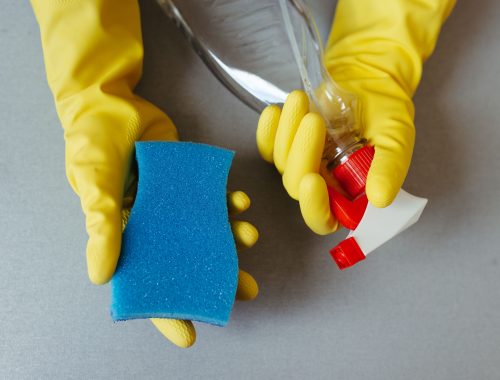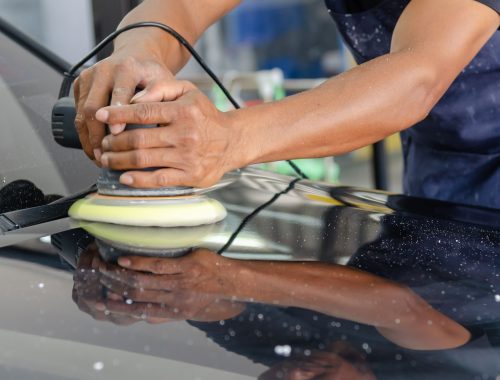
Remove water spots from car paint and glass by first trying a 50/50 vinegar-and-water solution or lemon juice — both acidic enough to dissolve the mineral deposits that cause light spotting. For tougher spots, a dedicated water spot remover instantly breaks down alkaline mineral stains on paint, glass, and polished metal; follow with a rinse and a coat of wax or sealant to protect against future spotting. If spots remain after chemical treatment, you’re likely dealing with etching, which requires physical polishing — starting with the least aggressive polish and escalating to compound only if needed.
Here’s how to match the removal method to the severity of the spotting, and why acting early matters more than any single product choice.
Key Takeaways
- Water spots form when minerals bond to paint and glass — they’re chemically different from basic surface dirt, which is why plain washing doesn’t remove them.
- Vinegar and lemon juice are effective natural options for lighter, more recently formed spots.
- Dedicated water spot removers handle tougher mineral stains that natural acids can’t fully dissolve.
- Etched spots require actual polishing — no chemical product removes spotting that has physically pitted the clear coat.
Matching Treatment to Spot Severity
Natural Solutions for Light Spotting
Water spots form when minerals in tap or hard water bond to paint and glass as the water evaporates, leaving behind a mineral residue that’s chemically different from basic surface dirt — this is exactly why plain washing alone doesn’t remove them (Decorecar). Acting early makes a real difference, since fresh mineral deposits haven’t had time to bond as tightly to the surface. A household vinegar solution mixed 50/50 with pure water is often successful on lighter, more recent spotting. Lemon juice works similarly, thanks to its acidic properties that help dissolve mineral deposits directly on both glass and paint.
Chemical Water Spot Removers

For tougher mineral stains that natural acids can’t fully dissolve, a dedicated heavy-duty water spot remover instantly breaks down alkaline water mineral stains from paintwork, glass, and polished metal surfaces (Chemical Guys). After washing away surface dirt, apply the remover, buff away residue, neutralize the treated area with water, then follow with a coat of wax or sealant — this protective layer helps water release more easily off the surface going forward, meaningfully reducing how often new spotting forms. A clay bar can also help lift both mineral deposits and stuck dirt or grime while keeping the surface wet and soapy throughout the process.
When Spots Have Become Etching
If vinegar, lemon juice, and dedicated removers all fail to lift the spotting, you’re likely dealing with etching — mineral deposits that have physically pitted into the clear coat rather than just sitting on top of it. This requires actual physical abrasion through polishing, starting with the least aggressive polish first, inspecting the results, then moving up to a compound only if the lighter approach doesn’t fully resolve it (Torque Detail). Our guide on choosing the right compound or polish covers how to match product aggressiveness to defect severity, which applies directly to etched water spot removal.
Once spots are removed, drying technique becomes the main prevention lever going forward — our guide on properly drying your car after washing covers the drying methods that stop new water spots from forming in the first place.
Frequently Asked Questions
Does hard water cause worse spotting than soft water?
Yes — hard water contains more dissolved minerals like calcium and magnesium, which leave heavier residue as the water evaporates, making spotting both more frequent and more stubborn compared to areas with softer water.
Can water spots be prevented entirely?
Not entirely, but drying the car promptly after washing or rain, and maintaining a wax or sealant layer, both significantly reduce how often and how severely spots form.
Is it safe to use vinegar on all paint types and clear coats?
Generally yes for a diluted 50/50 solution used briefly and rinsed promptly, though spot-testing an inconspicuous area first is good practice, particularly on older or more sensitive clear coats.
How can I tell if a spot is mineral residue or actual etching?
Run a fingernail gently over the spot after cleaning — if you can feel a texture or pit rather than a smooth surface, or if the spot survives a chemical remover treatment, it’s likely etched into the clear coat rather than sitting on top of it.
The Bottom Line
Removing water spots comes down to matching the treatment to severity — natural acids like vinegar or lemon juice for light spotting, a dedicated remover for tougher mineral stains, and polishing or compound only for spots that have actually etched into the clear coat. Prompt drying and a maintained wax or sealant layer are what keep new spots from forming in the first place.
Dealing with stubborn water spots or etching you can’t remove yourself? Contact San Diego Bumper and Collision for a professional assessment.