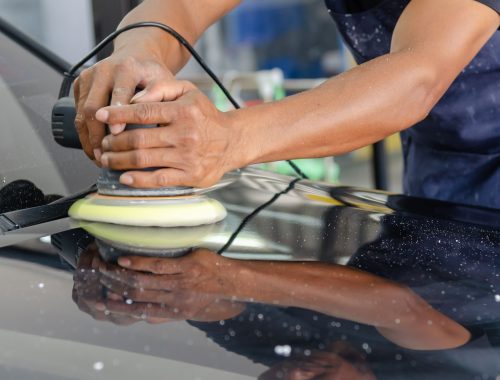

Choose the right polisher by matching the machine to your experience level: a dual-action (DA) polisher for beginners, since it spins and orbits simultaneously and carries a low risk of swirl marks or burn-through; a forced rotation DA for intermediate users who want more cutting power without stepping into high-risk territory; or a rotary polisher for experienced users tackling heavy defects, since it delivers maximum cutting power but can leave buffer trails, holograms, or burn-through if mishandled.
Here’s how the three machine types actually differ mechanically, which one fits your skill level, and the technical specs worth checking before you buy.
Key Takeaways
- DA polishers spin and orbit at once, making them the safest option for beginners working on clear coat finishes.
- Rotary polishers spin in one fixed direction with no oscillation, delivering the most cutting power but the highest mistake risk.
- Forced rotation DA polishers bridge the gap, offering more correction power than a standard DA without rotary-level risk.
- Most electric polishers run 500W-1200W, with higher wattage generally holding speed more consistently under load.
Comparing the Three Polisher Types
Dual-Action Polishers: The Beginner-Safe Option
A dual-action polisher spins and orbits simultaneously — the pad rotates on a central spindle while also wobbling or orbiting around that center — which is what makes it safer and easier to use, with less risk of swirl marks for beginners and most routine detailing tasks on clear coat finishes (JENNYCHEM). If you’re new to detailing and maintaining your own vehicle, select a dual-action polisher first — the forgiving mechanism gives you room to learn technique without the higher-stakes risk that a rotary machine carries.
Rotary Polishers: Maximum Power, Maximum Risk

Rotary polishers spin in a single fixed direction with no oscillation, delivering maximum cutting power and making them ideal for deep scratch removal, heavy oxidation, and professional-level paint correction (Jimbo’s Detailing). That same lack of oscillation is exactly what makes mistakes costly — too much pressure or dwell time in one spot can lead to buffer trails, holograms, or even burn-through on thin clear coat. Go for a rotary polisher only once you’re experienced, working on heavy defects, or operating in a professional paint-correction environment. If you’re still deciding whether your paint needs this level of correction, our guide on choosing the right compound or polish covers matching product aggressiveness to actual defect severity, which pairs directly with the machine decision here.
Forced Rotation DA: The Middle Ground
Forced rotation DA polishers bridge the gap between the aggressive performance of rotary machines and the relative safety of traditional DA models, letting intermediate users perform moderate cutting tasks — like removing light oxidation or fine scratches — without stepping fully into rotary-level risk (Alibaba Buying Guide). Once you’ve mastered the basics on a standard DA, this is generally the next machine to consider before jumping straight to rotary. Our guide on how to polish a car: step-by-step paint correction covers the full correction process this machine choice feeds into.
Technical Specs Worth Checking
Most electric polishers range from 500W to 1200W, with higher wattage generally meaning more consistent speed retention under load rather than bogging down on tougher panels. A typical DA polisher operates between 1,200 and 6,000 OPM (orbits per minute), and checking this range against your intended use — light maintenance polishing versus more aggressive correction work — helps confirm a specific model actually fits the job you’re buying it for.
Frequently Asked Questions
Can a DA polisher do everything a rotary polisher can?
Not quite — a standard DA generally can’t match a rotary’s cutting power for heavy oxidation or deep scratches, though a forced rotation DA closes much of that gap for moderate correction work.
What pad size should I pair with my polisher?
Pad size should match your machine’s throw and the panel size you’re working — smaller pads suit tighter areas and smaller machines, while larger pads cover more ground efficiently on bigger, flatter panels.
Is a rotary polisher worth buying for occasional home use?
Generally not for most occasional users — the learning curve and mistake risk outweigh the benefit unless you’re regularly correcting significant paint defects, in which case a forced rotation DA often delivers enough power more safely.
How much should a beginner expect to spend on a first polisher?
A solid entry-level DA polisher is widely available at a moderate price point, and it’s generally worth prioritizing build quality and wattage consistency over chasing the cheapest option available.
The Bottom Line
Choosing the right polisher comes down to honestly matching the machine to your experience level — DA for beginners, forced rotation DA for intermediate correction work, and rotary only once you’re experienced enough to manage its higher mistake risk. Getting this choice right protects your paint while still giving you room to grow into more advanced correction work over time.
Not ready to invest in a polisher yourself? Contact San Diego Bumper and Collision for professional paint correction.