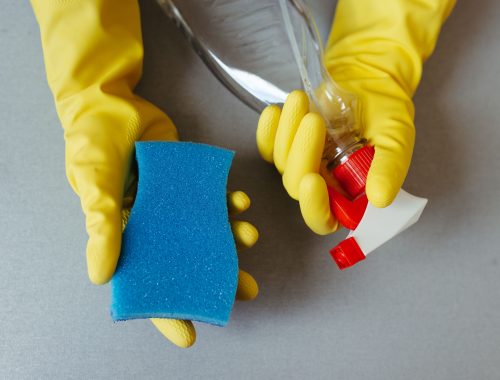
Clean your car interior by working top to bottom and dry to wet — vacuuming and dusting before shampooing or extraction — starting with the headliner, then the dashboard, doors, center console, seats, and finally the floor and carpets, since gravity pulls dirt and cleaning solution downward as you go. Pull out everything removable first (mats, seat covers, phone holders) for full access, vacuum every crevice, wipe hard surfaces with interior cleaner, then treat seats and carpet with material-specific products.
Here’s the full room-by-room order, the products that match each surface type, and where to go for a deeper dive on any single area.
Key Takeaways
- Work top to bottom, dry to wet — this order stops you from re-dirtying surfaces you’ve already cleaned.
- Remove everything loose first — mats, seat covers, and accessories all need to come out for full surface access.
- Match the product to the material — leather, fabric, plastic, and glass all need genuinely different treatment.
- Less product is more — over-applying cleaners and dressings creates buildup that attracts more dirt.
The Correct Cleaning Order
Preparation and Vacuuming
Take everything out first — floor mats, seat covers, phone holders, and anything else not permanently attached — to get full access to every surface underneath (Bissell). Use a shop vac or a powerful vacuum to clean every surface: seats, carpets, floor mats, the trunk, under the seats, between the center console and seats, cup holders, door pockets, and crevices. A soft detailing brush handles vents, buttons, steering wheel crevices, and textured dashboard surfaces that a vacuum nozzle alone can’t fully reach.
Wiping Hard Surfaces and Glass
Mix warm water with a few drops of mild dish soap, or use a dedicated all-purpose interior cleaner, to wipe down plastic surfaces and remove spots and stains, finishing with a dry microfiber cloth to prevent streaks or water spots from the cleaning solution itself (Chemical Guys). For glass, use a soft cloth — chamois works well — with an alcohol-based automotive glass cleaner, applying with one cloth and wiping clean with a second to avoid streaking. Our guide on cleaning car windows without streaks covers this two-towel technique in more depth.
Treating Seats, Carpet, and Trim by Material
Consistency matters more than intensity — a quick weekly wipe-down prevents the buildup that eventually forces a full deep clean. For leather seats specifically, use a dedicated leather cleaner rather than an all-purpose product, wipe with a microfiber towel, then apply leather conditioner to prevent cracking and fading; our guide on cleaning and protecting leather car seats covers this process in full. For fabric seats and carpet needing a genuine deep clean, our guide on cleaning car carpets and upholstery covers the extraction and shampoo methods that go beyond a routine wipe-down. If odors are part of what you’re dealing with, our guide on removing bad odors from your car’s interior covers diagnosing and treating that separately from surface cleaning. Less product is more across all of these surfaces — over-applying cleaners and dressings creates buildup and attracts more dirt, with one or two sprays per panel usually being enough.
Frequently Asked Questions
How often should a full interior clean happen?
A quick wipe-down and vacuum weekly, with a more thorough deep clean every one to two months depending on how much the vehicle is used and what conditions it’s exposed to.
Is it safe to use the same cleaner on leather and fabric?
No — leather needs a pH-balanced, leather-specific cleaner and conditioner, while all-purpose or fabric cleaners can dry out and eventually crack leather over repeated use.
What’s the biggest mistake people make cleaning their interior?
Working out of order — cleaning carpets before dusting the dashboard, for example, just means dust and debris fall onto surfaces you’ve already finished, doubling the work.
Can steam cleaning replace a full interior detailing routine?
Steam cleaning is a strong addition for sanitizing and lifting stubborn grime, but it generally works best alongside a normal vacuum and product-based cleaning routine rather than fully replacing it.
The Bottom Line
Cleaning your car interior comes down to a consistent order — top to bottom, dry to wet — and matching products to each surface material rather than using one cleaner everywhere. For the deeper, material-specific processes behind seats, carpet, trim, and odor removal, the linked guides above cover each in full detail.
Want your interior professionally detailed from top to bottom? Contact San Diego Bumper and Collision for a quote.