A do-it-yourself car wash is a coin- or card-operated bay where you handle the wash yourself with a high-pressure wand, a foaming brush, and a timed rinse. A basic wash typically starts at $1.50 to $3.00 for the first few minutes and lands between $8 and $12 for a thorough job with soap, tire cleaner, and a spot-free rinse.
Here’s how self-service bays actually work, what they cost, and when washing at home makes more sense — including the San Diego hose rule most drivers don’t know about.
Key Takeaways
- Self-service bays charge by the minute, roughly $0.50-$1.00 per minute, with most full washes running $8-$12 and taking 10-15 minutes.
- Always rinse the foaming brush for 10-15 seconds before it touches your paint — grit left by the last customer is a leading cause of wash scratches.
- Self-service washing uses the least water of any wash type, averaging 15.0 gallons per vehicle, versus 60.0 for in-bay automatics and 65.8-85.3 for conveyor tunnels without reclamation (EPA WaterSense at Work, Section 5.5, October 2012).
- California requires a shut-off nozzle on any hose used to wash a vehicle — a permanent statewide rule, echoed in San Diego’s own municipal water-waste prohibitions.
What Is a Do-It-Yourself Car Wash?
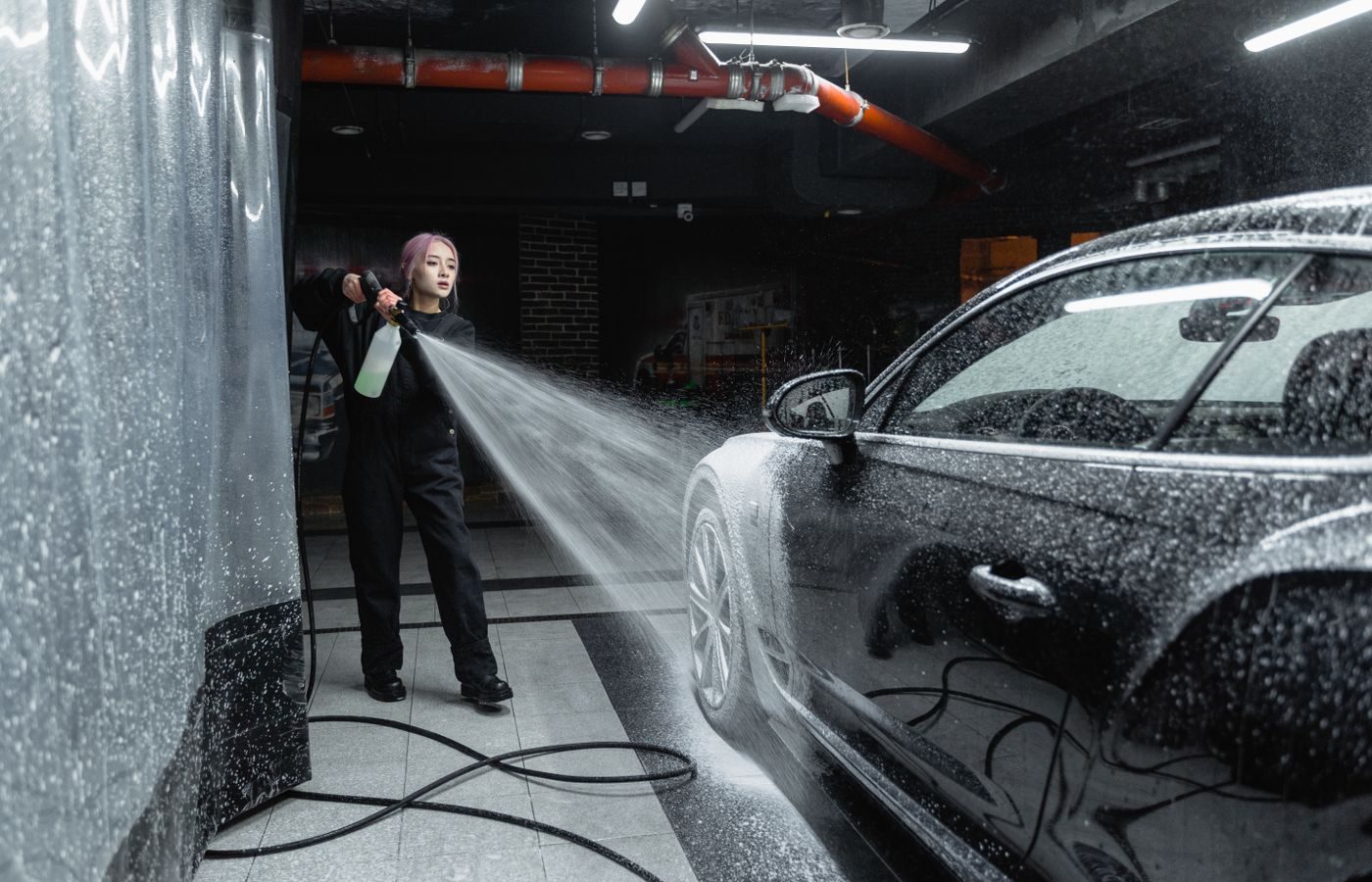
A DIY car wash — also called a self-service or coin-op bay — is an open or covered stall with a pressure wand mounted on a swing arm, a foaming brush, and a control dial. You feed the meter, turn the dial to the setting you want, and do the work yourself.
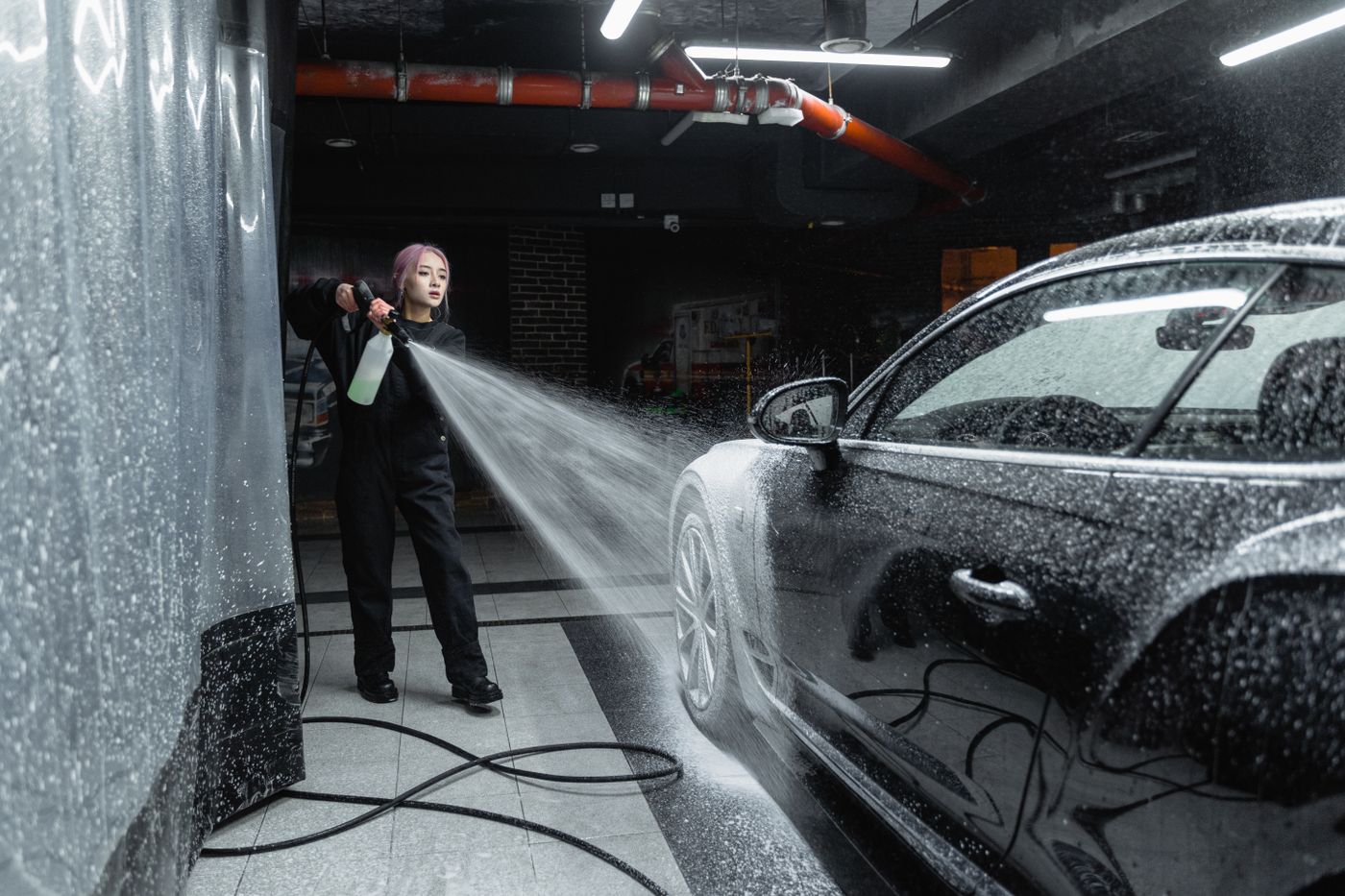
Most bays offer somewhere between three and six settings on the dial: pre-soak, soap, foaming brush, tire and engine cleaner, wax, and spot-free rinse. Many sites also have separate vacuum stations and, at newer locations, mat cleaners and compressed-air blowers.
The appeal is control. You decide how long to spend on the wheel wells, whether to hit the undercarriage after a beach trip, and how careful to be around trim and badges. The tradeoff is that you’re also responsible for the mistakes.
How Much Does a DIY Car Wash Cost?
Expect $0.50 to $1.00 per minute on the meter, with a minimum start of $1.50 to $3.00 — which buys anywhere from three to six minutes depending on the bay’s rate. A fast rinse to knock off dust runs $3 to $5. A complete wash — pre-soak, soap, brush, wheels, rinse — usually falls between $8 and $12 and takes 10 to 15 minutes. Prices vary by location and have drifted upward in recent years, so treat these as a planning range rather than a quote.
That puts a DIY bay well below a full-service hand wash and roughly in line with a mid-tier automatic tunnel — but only if you work efficiently. The meter doesn’t care that you’re still deciding which setting to use, so it pays to plan the sequence before you insert money.
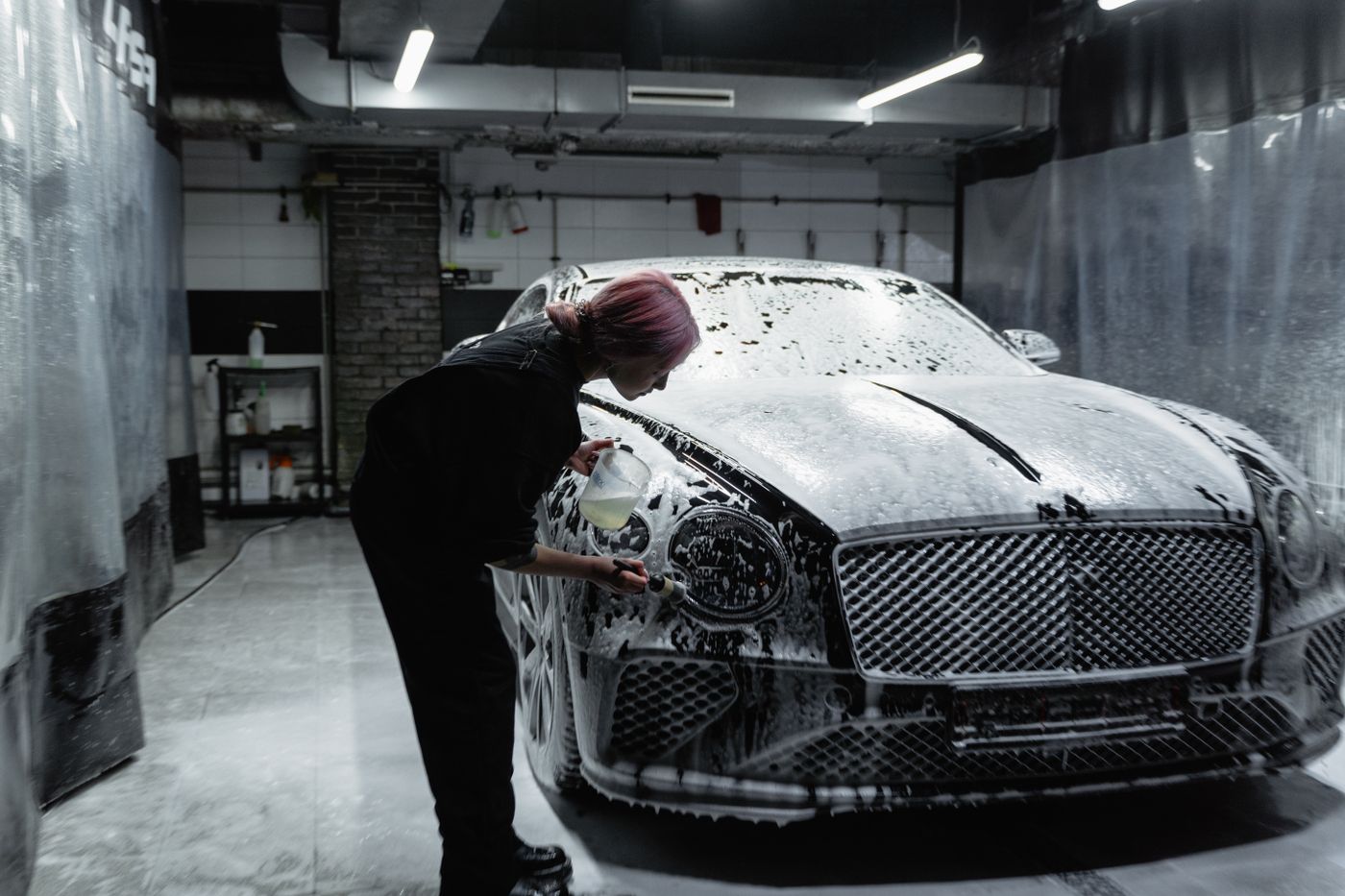
Bring your own microfiber drying towels. Air-drying in San Diego’s hard water is the fastest way to end up with mineral spotting on a car you just paid to clean, and the spot-free rinse setting only helps if you use it as the final step.
How to Use a Self-Service Bay, Step by Step
Work in this order and you’ll get a better result in less paid time.
- Set up before you pay. Park centered, windows up, mirrors folded if they’re power-folding. Get your towels and any of your own supplies out of the trunk first.
- Pre-soak from the bottom up. Start low and work upward so the cleaner has dwell time on the dirtiest panels while you cover the rest.
- Rinse the brush before it touches the car. Hold it under the wand for 10-15 seconds. The last person may have scrubbed a muddy truck with it, and trapped grit turns a brush into sandpaper.
- Soap and scrub from the roof down. Gravity carries dirty suds downward, so working top to bottom keeps you from dragging grime back over clean paint.
- Do wheels and tires last. Brake dust and road grime are the most abrasive material on the car. Keeping them at the end prevents cross-contamination.
- Finish with spot-free rinse, then dry immediately. Sheet the water off with a low-pressure rinse, then dry with microfiber before it evaporates.
Never aim the pressure wand directly into the engine bay, into door or window seals, or at close range on peeling clear coat or existing paint chips — high-pressure water will lift damaged finish further.
Does a DIY Bay Use More Water Than an Automatic Wash?
No — it uses considerably less, and this is the most consistently misunderstood thing about self-service washing.
EPA’s WaterSense program compared the three commercial wash types and found that self-service washing uses the least water of any of them, averaging 15.0 gallons per vehicle. In-bay automatics (the kind at gas stations) average 60.0 gallons per vehicle. Conveyor tunnels without water reclamation use 65.8 gallons per vehicle for friction washing and 85.3 gallons for touchless friction-free washing (EPA WaterSense at Work, Section 5.5 Vehicle Washing, October 2012).
The reason is simple: you control the trigger. Water only flows when you’re actively spraying, and you stop when the car is clean.
Note the date on that data — October 2012. Reclamation technology has improved since, so modern tunnels using recycled water can come in far lower than the no-reclamation figures above, down to as little as 7.8 gallons per vehicle for friction systems.
Washing at Home: What the Rules Actually Say
You can wash your car in your own driveway, but the hose must be fitted with a shut-off nozzle that stops the flow immediately when you’re not spraying. This is a permanent California statewide prohibition on water waste, and the City of San Diego carries the same requirement in its own year-round water-use restrictions (City of San Diego Water Use Restrictions). If you live in Chula Vista, El Cajon, La Mesa, or unincorporated county, your water agency has its own ordinance — but the shut-off nozzle requirement applies statewide regardless.
The rule exists because an unattended hose is genuinely wasteful. A standard garden hose flows somewhere between 8 and 17 gallons per minute, so a hose left running through a 15-minute wash can easily pass 100 gallons — several times what the same wash would use at a self-service bay.
There’s a second reason to think twice about driveway washing: runoff. Soap, brake dust, and oil residue flow off a driveway straight into a storm drain, and in San Diego storm drains discharge to creeks and the ocean without treatment. Commercial bays are plumbed to the sanitary sewer.
Mistakes That Damage Paint at a DIY Bay
The most expensive damage at a self-service wash is almost always self-inflicted.
- Using the brush dry or unrinsed. Embedded grit from the previous user drags across your clear coat.
- Holding the wand too close. Keep roughly 12 inches of distance. Point-blank pressure can lift loose clear coat, peeling paint, and edges of decals or vinyl.
- Blasting damaged areas. If you already have a chip, scrape, or a lifting panel edge, high pressure will make it worse.
- Washing a hot car in direct sun. Soap dries before you can rinse it, leaving streaks that are harder to remove than the original dirt.
- Skipping the drying step. Evaporating hard water leaves mineral deposits that etch into clear coat over time.
If a wash reveals damage you hadn’t noticed — a cracked bumper cover, a lifting edge, or a scrape down to primer — that’s worth having looked at. Our auto body and paint services cover everything from touch-up work to full panel refinishing.
Frequently Asked Questions
Is a self-service car wash cheaper than an automatic one?
Usually, yes, for a basic wash. A DIY bay typically costs $8-$12 for a thorough wash, while automatic tunnel packages often start higher and climb quickly with add-ons. The catch is that you’re paying by the minute, so an unhurried wash can cost more than a mid-tier automatic.
Are the foaming brushes at DIY car washes safe for paint?
They’re safe only if you rinse them thoroughly first. The brush itself is soft, but it collects grit from every vehicle that used it before yours. Rinse for 10-15 seconds under the pressure wand, and if the bristles look worn down or matted, skip the brush entirely and use soap plus your own wash mitt.
Can I wash my car in my driveway in San Diego?
Yes, as long as the hose has a shut-off nozzle attached that stops water flow when you’re not actively spraying. That requirement is permanent statewide in California and appears in the City of San Diego’s own year-round restrictions (City of San Diego). Check your local water agency if you’re outside city limits, since some districts add their own rules.
Does a self-service bay really use less water than an automatic wash?
Yes, by a wide margin. EPA measured self-service washing at an average of 15.0 gallons per vehicle — the lowest of any commercial wash type — versus 60.0 for in-bay automatics and 65.8 to 85.3 for conveyor tunnels without water reclamation (EPA WaterSense at Work, October 2012). You control the trigger, so water flows only when you need it.
How often should I wash my car in a coastal climate?
Every two to three weeks is a reasonable baseline near the coast. Salt air accelerates corrosion on unprotected metal, and bird droppings and tree sap can etch clear coat within days in direct sun. If your car is regularly parked near the water, rinsing the undercarriage matters as much as the paint.
The Bottom Line
A do-it-yourself bay is the cheapest way to get a genuinely clean car if you work in the right order: pre-soak low, rinse the brush, soap from the roof down, wheels last, spot-free rinse, then dry with microfiber right away. Budget $8-$12 and about 15 minutes.
It’s also the most water-efficient option available — about 15 gallons per vehicle, well under half what an in-bay automatic uses. Washing at home is legal with a shut-off nozzle, but an unattended hose can use several times that and sends runoff into storm drains. If a wash turns up paint damage, a cracked bumper, or a panel that isn’t sitting right, contact San Diego Bumper and Collision for a free estimate.