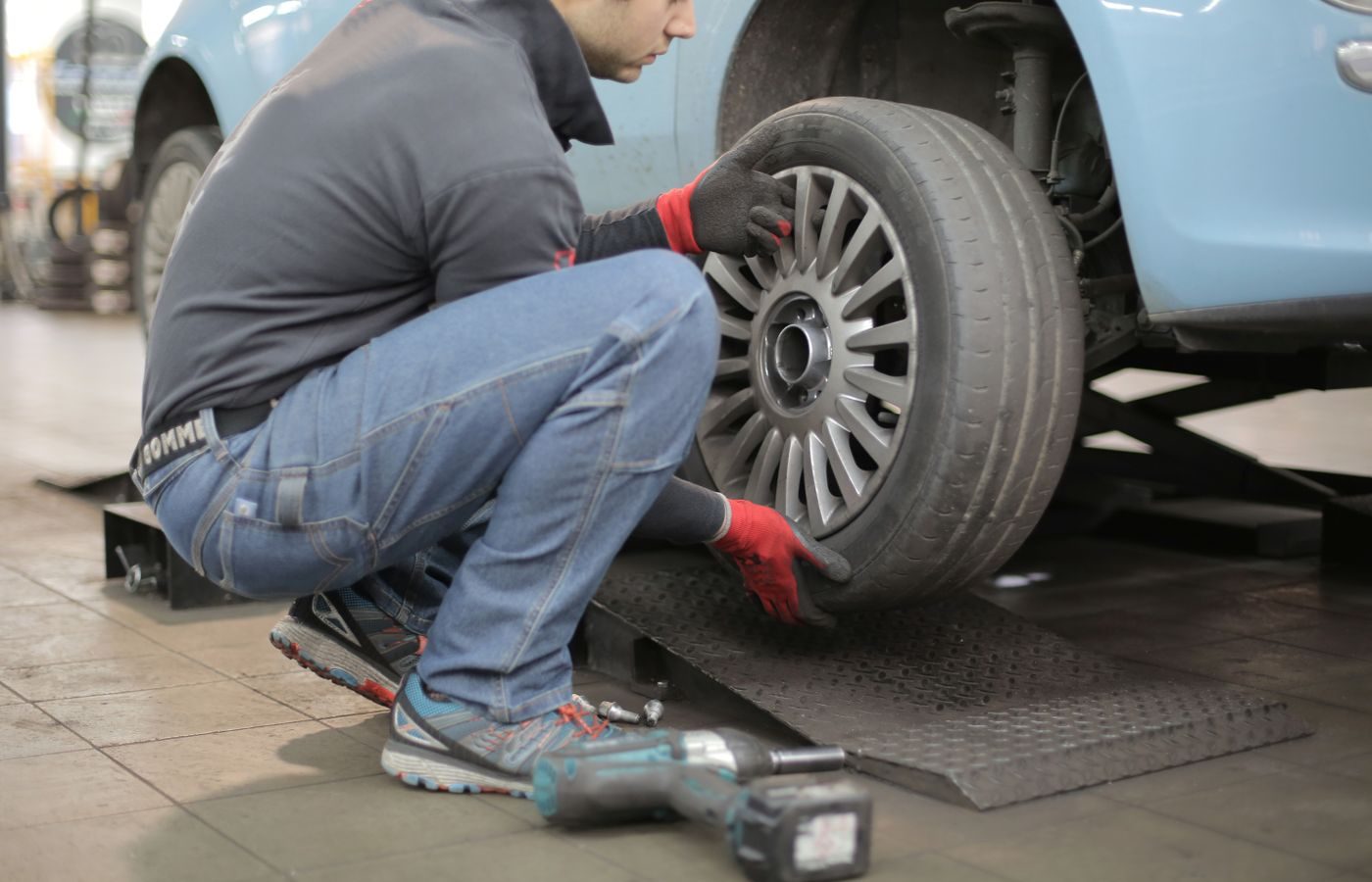
Changing a tire takes 15 to 30 minutes for most people doing it themselves on the roadside. If you’ve done it before and have decent tools, 10 to 15 minutes is realistic. A shop with a lift and an impact wrench can swap one in 5 to 15 minutes.
The variable nobody plans for is roadside assistance. Response times commonly run 30 to 60 minutes before anyone arrives, then another 15 to 20 on scene — so calling for help usually costs you more total time than doing it yourself, if you’re able to. (Your own provider’s stated response window is the number to check; it varies by location and time of day.)
Key Takeaways
- First time, roadside: 45-60 minutes. Experienced: 10-15 minutes. Typical: 15-30 minutes.
- Professional shop: 5-15 minutes for one wheel; 45-90 minutes for a full set of four new tires.
- Roadside assistance: 30-60 minutes waiting plus 15-20 minutes on scene.
- Loosening lug nuts before jacking the car is the step that saves the most time and prevents the most frustration.
How Long Does It Take? By Situation
| Situation | Typical time |
|---|---|
| Experienced, good tools, roadside spare | 10-15 min |
| Average driver, roadside spare | 15-30 min |
| First time doing it | 45-60 min |
| Professional shop, one wheel | 5-15 min |
| Professional shop, four new tires mounted | 45-90 min |
| Roadside assistance (wait + service) | 45-80 min total |
The Steps, and How Long Each One Takes
1. Find a safe spot and set up (2-4 minutes). Get fully off the road, on level ground, hazards on, parking brake set, transmission in park. If you have wheel chocks or even a rock, block the wheel diagonally opposite the one you’re changing.
2. Break the lug nuts loose (2-5 minutes). Do this before you jack the car up, while the tire’s weight holds the wheel still. Turn counterclockwise, a quarter turn each — just loose, not off. If they won’t budge, stand on the wrench arm rather than pulling with your arms.
This step is where most of the variance lives. Lug nuts torqued by an impact gun at a tire shop, or corroded from years of road salt, can be genuinely difficult.
3. Jack the car up (3-5 minutes). Find the manufacturer’s jack point — your owner’s manual shows it, and it’s usually a reinforced pinch weld behind the front wheel or ahead of the rear. Raise until the tire clears the ground by an inch or two.
Safety, not optional: never put any part of your body under a vehicle supported only by a jack. A jack is a lifting device, not a support device — it can slip, sink into soft ground, or fail. For a roadside wheel swap you never need to go underneath, so don’t. If a job requires getting under the car, it requires jack stands on level, solid ground.
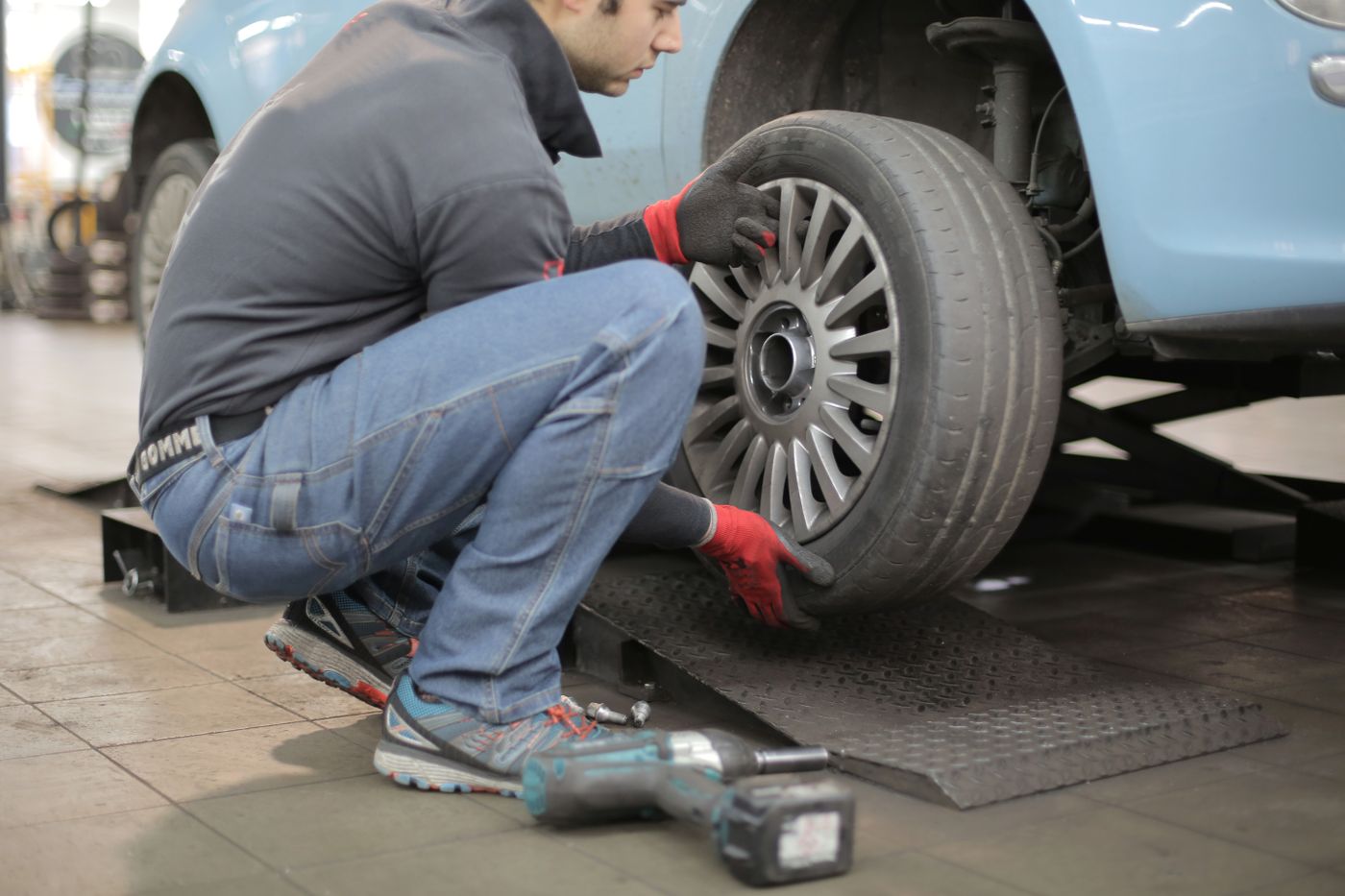
4. Swap the wheel (3-5 minutes). Lug nuts off, wheel off, spare on, lug nuts hand-tight in a star pattern.
5. Lower and torque (3-5 minutes). Lower until the tire touches, then tighten the lug nuts fully in a star or crisscross pattern — never in a circle. Lower the rest of the way and give them a final check.
6. Stow everything (2-3 minutes). Flat tire, jack, and tools go back in the car. Don’t leave the jack on the shoulder.
Why “First Time” Takes Three Times Longer
It isn’t the mechanical work — it’s the searching. First-timers spend most of their time locating the spare (often under the trunk floor or slung beneath the rear of a truck), finding the jack and the lug wrench, working out where the jack point is, and figuring out which way the lug nuts turn.
Doing a practice change in your driveway on a Saturday cuts your roadside time substantially. You’ll know exactly where everything lives and whether your lug nuts are seized before it matters.
Important Limits on Spare Tires
Compact “donut” spares are speed- and distance-limited — typically 50 mph and about 70 miles. They’re designed to get you to a tire shop, not to finish a road trip.
Many newer vehicles have no spare at all, carrying an inflator-and-sealant kit instead. A sealant kit takes about 10-15 minutes to use and only works on small tread punctures — it does nothing for a sidewall tear or a blowout. Check your trunk before you need to know.
Torque matters. Lug nuts should be re-torqued to spec, and having a shop check them shortly after a roadside change is worth doing. Under-torqued nuts can loosen; over-torqued ones warp brake rotors and make the next change harder.
When Not to Change It Yourself
Some situations are worth the wait for roadside assistance:
- Narrow shoulder on a busy freeway. Traffic passing at 70 mph a few feet away is a genuine hazard. Stay in the vehicle with hazards on and call for help.
- No level, solid ground. A jack on soft dirt, gravel, or a slope can slip.
- Sidewall damage or a blowout, where a sealant kit is useless and the wheel itself may be damaged.
- You physically can’t break the lug nuts loose. Forcing it with a cheater bar risks rounding the nuts, which turns a 20-minute job into a much larger one.
If a blowout caused body damage — a shredded tread can tear up a wheel arch, rocker panel, or fender liner — contact San Diego Bumper and Collision for an estimate.
Frequently Asked Questions
How long does it take a professional to change a tire?
Five to 15 minutes per wheel with a lift and an impact wrench. Mounting four brand-new tires onto wheels, including balancing, typically takes 45 to 90 minutes because each tire has to come off the rim and the assembly has to be balanced.
How long does roadside assistance take to change a tire?
Plan on 45 to 80 minutes total: 30 to 60 minutes for arrival plus 15 to 20 minutes for the change itself. Arrival time depends heavily on your location and time of day.
Can I drive on a spare tire, and how far?
On a compact “donut” spare, generally no faster than 50 mph and no more than about 70 miles. Full-size spares can be driven normally, but check their age and pressure — a spare that’s sat for eight years may not be safe regardless of tread.
What if my car doesn’t have a spare tire?
Many newer vehicles carry a sealant and inflator kit instead. It handles small tread punctures in about 10-15 minutes but won’t fix sidewall damage or a blowout. In those cases you need a tow. Check what’s in your trunk now rather than finding out on the shoulder.
Should I re-torque the lug nuts after changing a tire?
Yes. Have them checked with a torque wrench soon after, especially following a roadside change where you tightened by feel. Correct torque prevents both loosening and warped rotors.
The Bottom Line
Expect 15 to 30 minutes for a typical roadside tire change, 10 to 15 if you’ve done it before, and 45 to 60 the first time. A shop does it in 5 to 15.
The single biggest time-saver is breaking the lug nuts loose before you jack the car up. The second is knowing where your spare and tools live before you need them — practice once in the driveway and you’ll cut your roadside time substantially.
If the flat came from hitting something hard enough to bend a wheel or knock the alignment out, that’s worth checking too — see our guide to tie rod replacement cost and symptoms.