Apply glaze to your car by dispensing about five pea-sized dots onto an applicator pad, lightly blotting over a roughly 20×20 inch section, then working it into the paint with very light pressure using circular motions before buffing off by hand or with a mechanical buffer. Glaze goes on after polishing and before waxing — it’s a filler product packed with micro-refined oils and leveling agents that temporarily fills fine swirl marks and imperfections, though it washes off within about a month.
Here’s exactly what glaze does that polish and wax don’t, the correct application technique, and where it fits in a full detailing sequence.
Key Takeaways
- Glaze fills minor imperfections rather than removing them — it’s a cosmetic enhancement layered on top of, not a substitute for, real paint correction.
- The correct order is polish, then glaze, then wax — glaze bridges the gap between correction and protection.
- Glaze is temporary, typically washing off within about a month, sometimes sooner.
- Very light pressure and circular motions are the correct application technique — glaze needs a thin, even layer, not heavy scrubbing.
What Glaze Actually Does
A glaze is a filler product that fills in minor imperfections in paint. These products are packed with micro-refined oils, fillers, and leveling agents designed to rescue a car’s appearance from swirls and light scratches (Stoner Car Care). Glazes generally consist of a filler component, a mild polish, and sometimes a wax element combined into one product. The formula enhances the surface of the paintwork while reducing the visible appearance of fine swirl marks, without actually removing them the way a genuine polish or compound would.
Where Glaze Fits in the Detailing Sequence
You should use a glaze after polishing and before waxing (Chemical Guys). This ordering matters: polish handles genuine correction of the paint’s actual defects, glaze then fills in the residual, finer imperfections that polish alone didn’t fully resolve, and wax or sealant applied last locks in a protective topcoat over everything underneath. Skipping straight from polish to wax without a glaze step is common and perfectly fine for many cars, but glaze offers a real visual boost for paint that still shows some fine marks after correction.
The Application Process

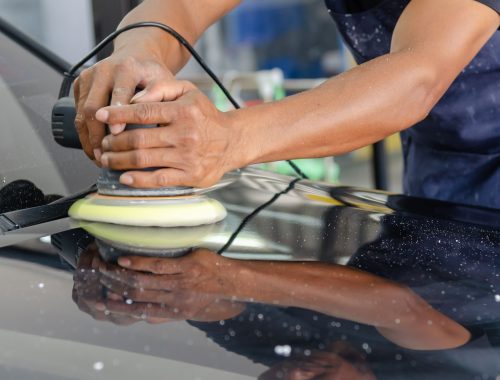
Make sure the surface is clean, dry, and free from contaminants before applying any glaze product — any residual dirt or grime gets worked into the finish during application rather than being sealed under a clean layer. Dispense about five pea-sized dots onto your applicator pad, then lightly blot over an area roughly 20×20 inches, using very light pressure and circular motions to lightly coat the surface (Auto Finesse). Once the section is covered, move on to buffing — by hand with a microfiber cloth or applicator, or with a mechanical buffer for larger areas or faster coverage.
If you’re not sure your paint even needs glaze versus just moving straight to protection, our guide on choosing the right compound or polish covers assessing your paint’s actual defect level first.
Understanding Glaze’s Temporary Nature
Glazes are temporary products that will wash off after about a month, sometimes less, depending on washing frequency and environmental exposure. This is worth understanding clearly before applying: glaze is a cosmetic enhancement, not a lasting fix, and the fine imperfections it’s filling are still physically present in the paint underneath — they simply become visually less apparent for a limited window. For lasting protection rather than temporary cosmetic enhancement, our guide on protecting your car with a sealant covers a genuinely longer-lasting option that follows glaze in the application order.
Frequently Asked Questions
Is glaze necessary for every detailing session?
No — it’s an optional enhancement step, most valuable when fine swirl marks remain visible after polishing and you want maximum gloss for a specific event or showcase, rather than a step every routine detail requires.
Can glaze be applied over an existing wax or sealant layer?
Generally not recommended — glaze works best on bare, freshly polished paint, and applying it over existing wax or sealant can create adhesion or layering issues that compromise both products’ performance.
Does glaze provide any actual UV or environmental protection?
Minimal to none — glaze is primarily a cosmetic filler product, not a protective layer, which is exactly why wax or sealant application afterward remains necessary for genuine environmental protection.
Can I use a glaze instead of a full polish if my paint only has very light marks?
For extremely light marks, glaze alone can provide a noticeable visual improvement, though it’s addressing appearance rather than actually correcting the underlying paint defect the way a polish would.
The Bottom Line
Applying glaze means five pea-sized dots per section, light circular motion application, and buffing off by hand or machine — always after polishing and before waxing. It’s a temporary cosmetic enhancement that fills fine imperfections for about a month, providing extra shine and swirl-mark concealment on top of genuine paint correction, not a replacement for it.
Want your paint professionally corrected and finished? Contact San Diego Bumper and Collision for a detailing consultation.