Get coffee out of a car seat by acting before it dries — blot the spill with a clean, dry microfiber towel or paper towel first, then follow with a fresh cloth dampened with cold water and blot again, since cold water dilutes the remaining coffee and prevents tannins from setting deeper into the material. For fabric seats, mix one tablespoon of liquid dish soap with two cups of cool water and work it in with a soft-bristled brush in circular motions, then rinse with a damp cloth. For leather, blot rather than rub, use pH-neutral soap and water without over-saturating, and finish with a leather conditioner to prevent cracking.
Here’s the material-specific treatment for fabric, leather, and vinyl, why cold water genuinely matters for coffee specifically, and how to handle any lingering odor once the stain itself is gone.
Key Takeaways
- Act before the coffee dries — fresh stains lift out far more easily than ones that have had time to set into the material.
- Cold water, not warm, is the right choice — it dilutes coffee’s tannins rather than helping them set deeper.
- Blot leather, don’t rub it — rubbing spreads the stain and pushes it deeper into the material.
- Baking soda handles lingering odor — sprinkle over the treated area and leave overnight after the stain itself is addressed.
Treatment by Seat Material
The First Response Matters Most
Start by blotting the spill with a clean, dry microfiber towel or paper towel, then follow up with a fresh cloth dampened with cold water and blot again (Chemical Guys). Using cold water specifically helps dilute the remaining coffee and prevents the tannins from setting deeper into the fabric — this is exactly why acting quickly, before the coffee dries, makes such a meaningful difference in how easily the stain comes out. A dried coffee stain has had time for those tannins to bond with the fibers, turning a simple blot-and-treat job into a more involved cleaning session.
Fabric, Leather, and Vinyl Each Need a Different Approach
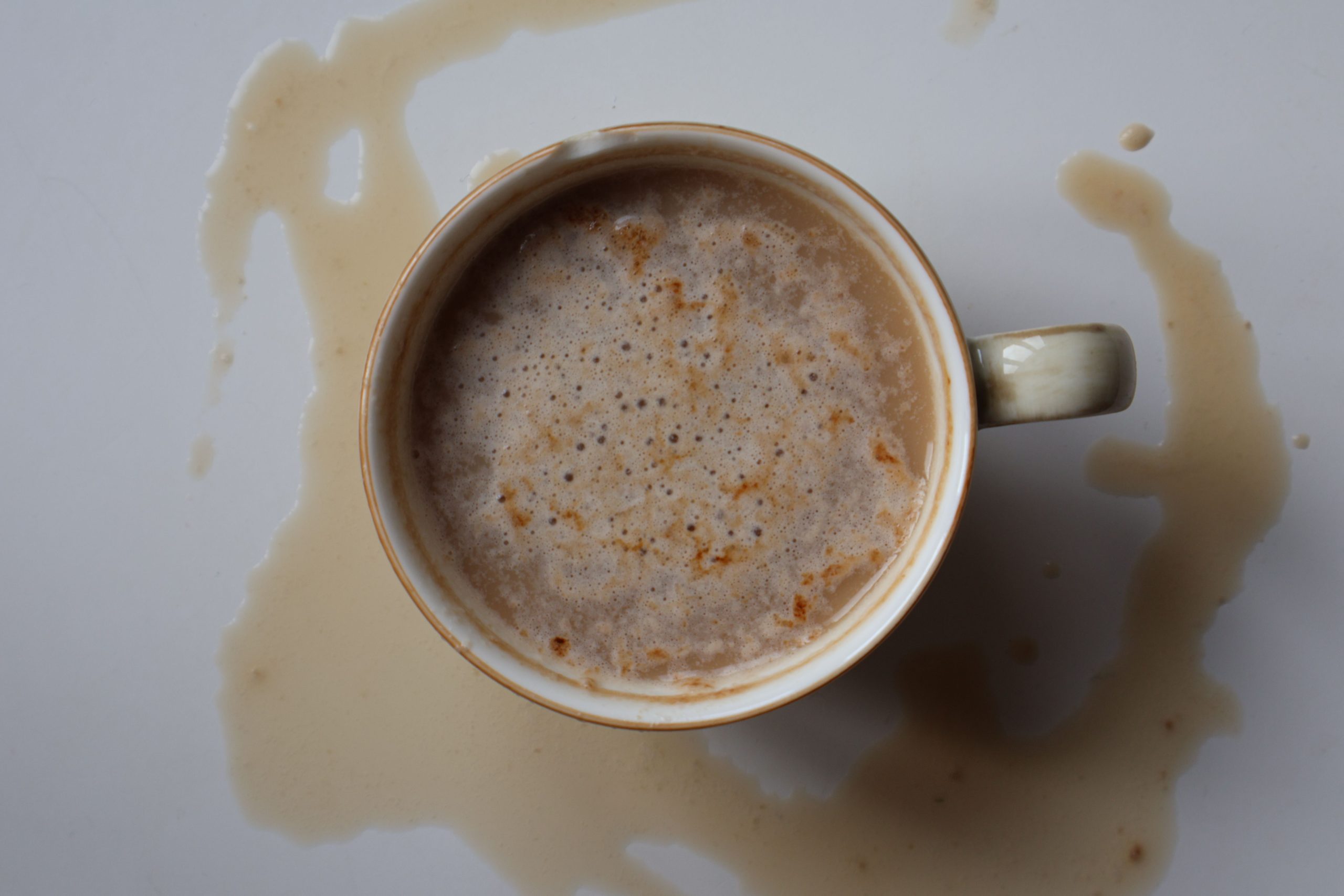
For fabric seats, mix one tablespoon of liquid dish soap with two cups of cool water and use a soft-bristled brush, working in a steady circular motion, then rinse the area with a damp cloth to remove all soap residue (DetailXPerts). A baking soda and water paste works as an alternative for fabric, handling both stain removal and odor absorption in one step, while a white vinegar and water mix — mildly acidic — helps break down coffee’s tannins without damaging most seat fabrics.
For leather seats, use a clean cloth to blot up as much coffee as possible, avoiding rubbing, which spreads the stain and pushes it deeper into the material. Use pH-neutral soap and water to clean the surface, avoiding over-saturation, since too much water can damage leather over time. Apply a leather conditioner afterward to restore softness and prevent cracking — our guide on cleaning and protecting leather car seats covers this conditioning step in more depth. For vinyl seats, a baking soda paste or a vinyl-safe cleaner handles the stain, followed by a damp cloth wipe and a vinyl protectant to keep the surface supple afterward.
Handling Lingering Odor
To neutralize any lingering coffee odor once the visible stain is addressed, sprinkle baking soda over the treated area and leave it overnight before vacuuming it away. Coffee’s strong scent can persist even after the visible stain is gone, so this extra step matters if you want the seat to genuinely smell clean rather than just look clean. If odor persists beyond a single treatment, our guide on removing bad odors from your car’s interior covers more thorough odor-elimination approaches.
Frequently Asked Questions
Does adding milk or sugar to coffee make the stain harder to remove?
Yes, generally — milk adds protein-based residue and sugar can leave a slightly sticky film, both of which benefit from the same cold-water dilution and blotting approach but may need a bit more thorough rinsing.
Can an old, set-in coffee stain still be removed?
Often yes, though it typically takes more repeated treatment and patience than a fresh spill — the same material-specific methods still apply, just with lower odds of complete removal in a single attempt.
Is club soda a good alternative to the dish soap solution for fabric?
Yes — club soda’s carbonation can help lift coffee stains from fabric in a pinch, working similarly to the cold-water dilution principle, though a dedicated cleaning solution generally performs more reliably for set stains.
Should I test any cleaning solution before treating the full stain?
Yes, always — testing on a hidden area first catches any discoloration risk before it happens somewhere visible, which matters especially on leather and lighter-colored fabric.
The Bottom Line
Getting coffee out of a car seat comes down to acting fast with cold water and a blot-don’t-rub approach, then matching the deeper treatment to your specific seat material — fabric, leather, or vinyl each respond best to a genuinely different product and technique. A baking soda follow-up handles any lingering odor once the visible stain itself is gone.
Dealing with a stubborn coffee stain that won’t come out? Contact San Diego Bumper and Collision for professional interior cleaning.