Remove scratches from a car by first checking the depth with your fingernail: if your nail glides over the scratch without catching, it’s a clear coat scratch you can likely polish out yourself; if it catches, the damage reaches the primer or bare metal and needs professional repair. Clear coat scratches respond well to a wash, then a scratch removal compound or fine polish worked in with a microfiber applicator.
Here’s how to identify what you’re actually dealing with, the DIY process for the scratches you can fix, and realistic costs for the ones you can’t.
Key Takeaways
- The fingernail test tells you almost everything — glides over means clear coat (DIY-able); catches means primer or deeper (needs a shop).
- Clear coat scratches respond to polish or a scratch removal kit; deeper scratches need touch-up paint or full panel repainting.
- Professional repair runs $50-$3,000+ depending on depth — $150-$300 for clear coat, $500-$1,000 for primer-level, up to $2,500 for deep paint damage.
- Over-sanding during DIY repair risks “burn through” — breaching the clear coat permanently, which can only be fixed by repainting the whole panel.
Step One: Identify the Scratch Depth
Run your fingernail across the scratch. If it glides over smoothly without catching, the damage is superficial — confined to the clear coat, the topmost transparent protective layer. If your nail catches or you see a different color underneath, the scratch has likely reached the base color coat or primer, and polishing alone won’t fully fix it (Motorist Care).
A scratch that feels genuinely deep or rough, exposing what looks like bare metal, has gone through multiple layers — that level of damage needs professional attention quickly, since exposed metal is vulnerable to rust.
Fixing Clear Coat Scratches Yourself
- Wash the surface thoroughly first. Polishing over dirt or grit risks introducing new scratches while you’re trying to fix the old one.
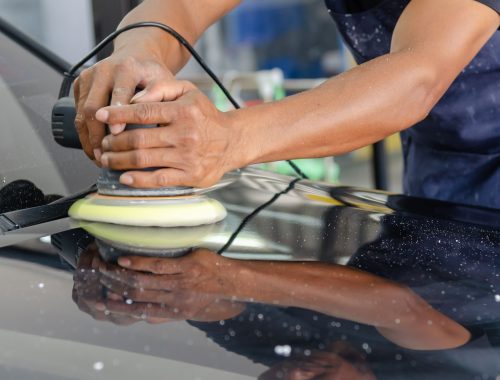
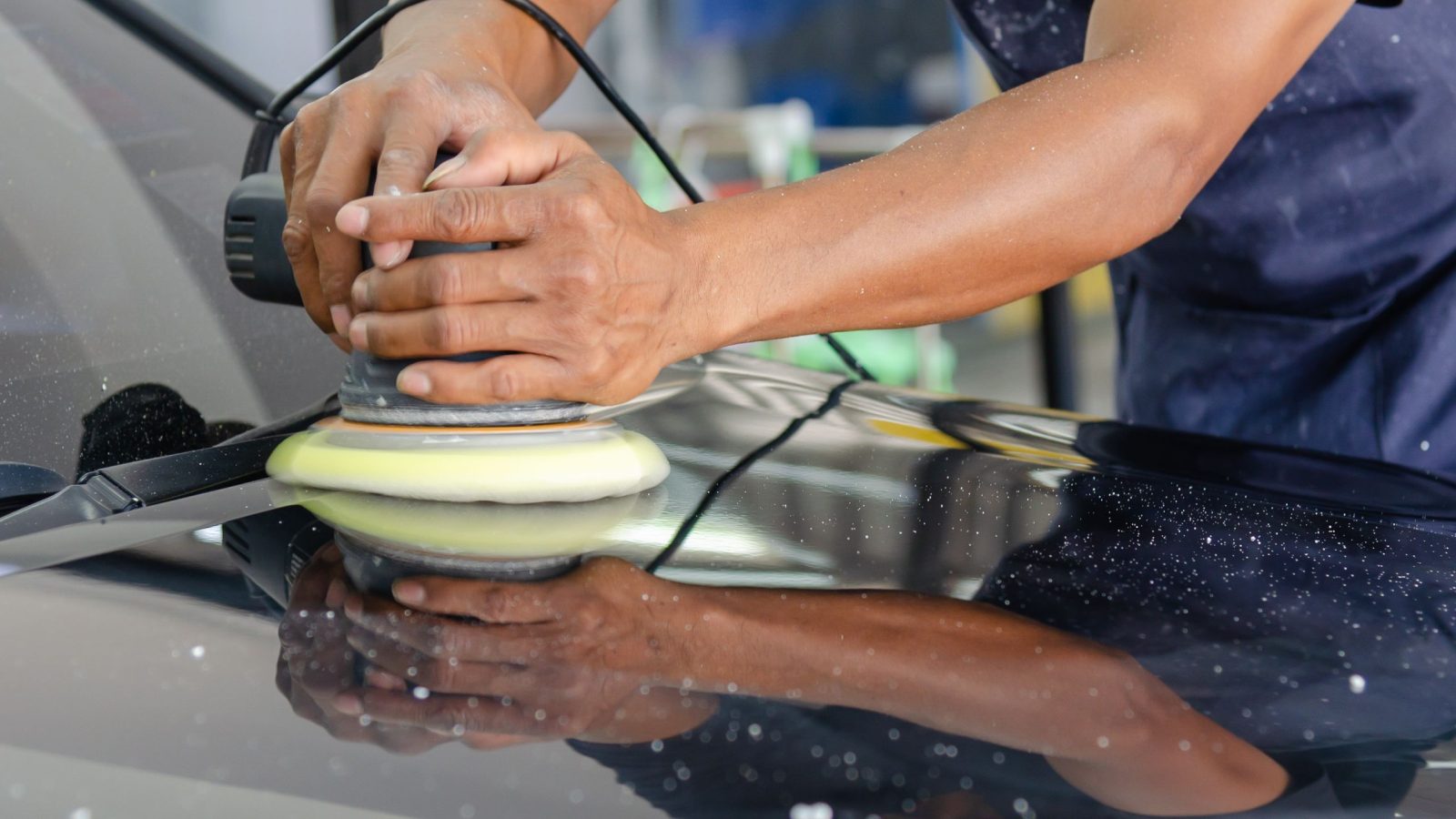
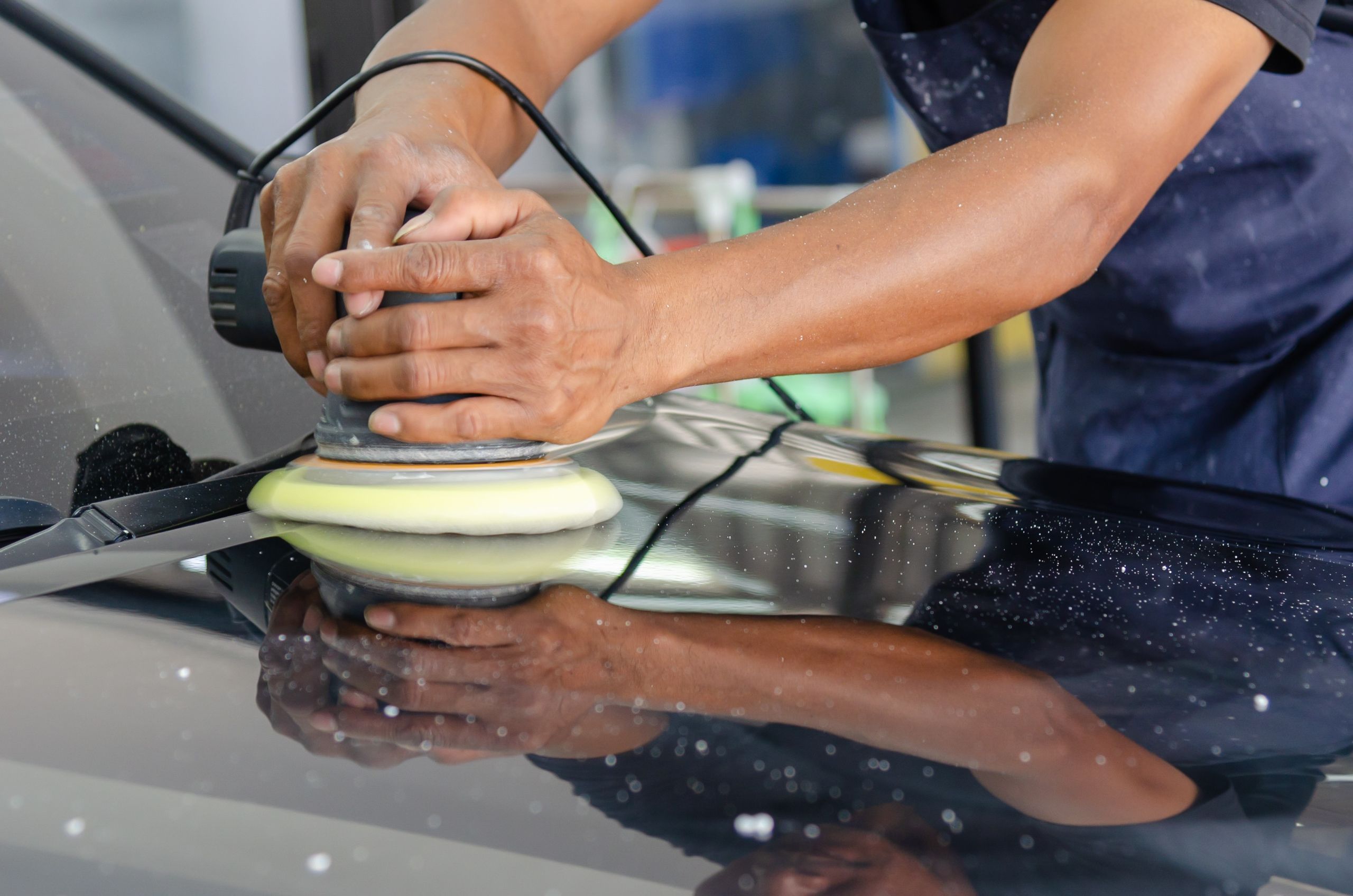
- Apply a scratch removal compound or fine polish to a microfiber applicator pad, working it into the scratch using small circular motions.
- Wipe away excess product with a clean microfiber towel and inspect the result under good lighting.
- Repeat if needed, but avoid excessive pressure or repeated aggressive passes in the same spot — this is exactly where over-sanding risk creeps in.
Scratch repair kits sold at auto parts stores typically include a scratch-removing compound, a buffing pad, and sometimes a finishing polish or wax — a reasonable all-in-one option for someone tackling this for the first time (Chemical Guys).
The Real Risk: Burning Through the Clear Coat
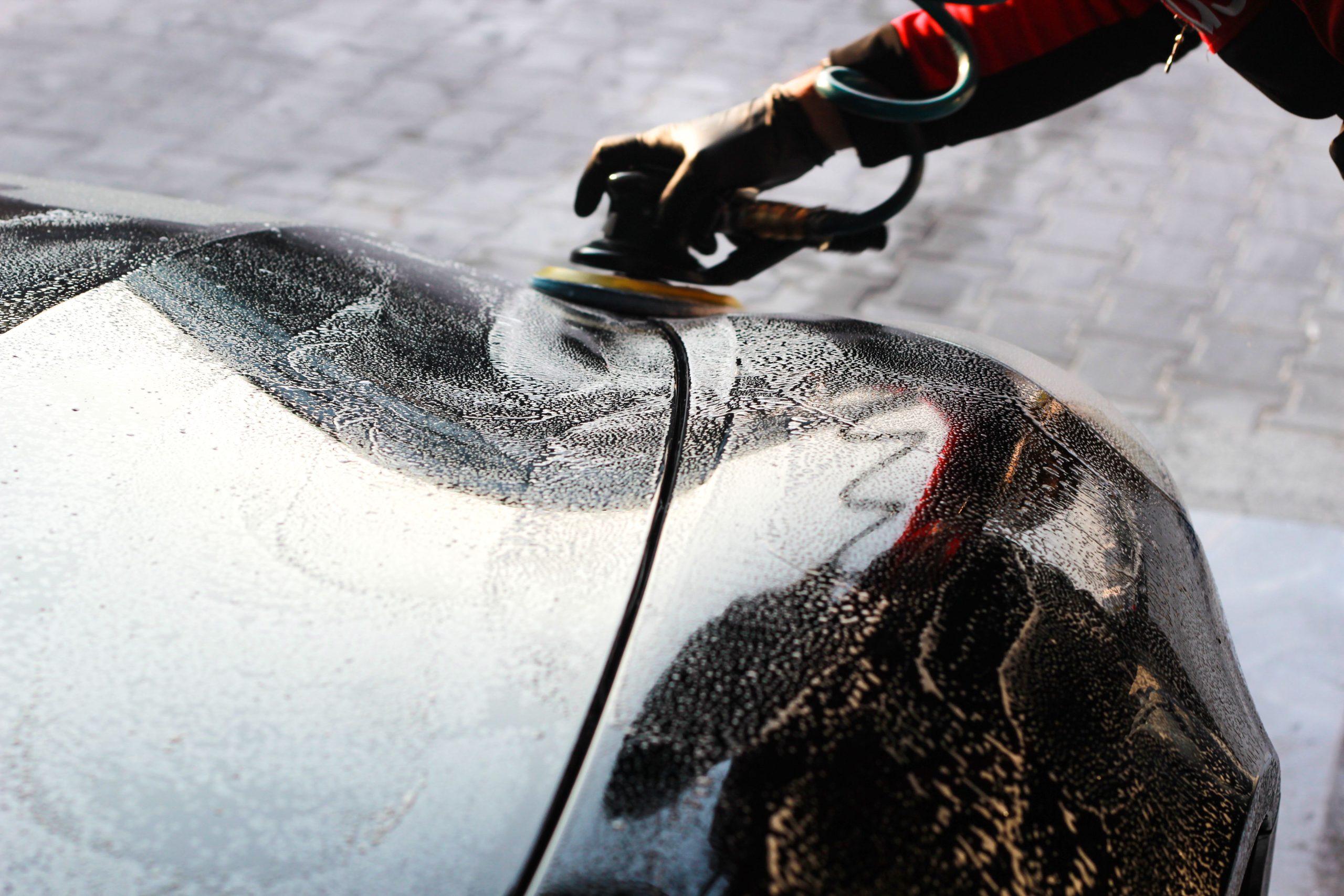
Over-sanding or over-polishing during a DIY repair can create what professionals call a “burn through” — breaching the clear coat entirely. Once that happens, a permanent ring or halo forms around the repair area that can’t be buffed out; the only fix at that point is repainting the entire panel (ClearPro).
This is exactly why patience matters more than pressure. Light, controlled passes with the right product take longer but avoid turning a fixable clear coat scratch into an expensive repaint situation.
What Professional Repair Actually Costs
Professional repair ranges from $50 to $3,000+ depending on scratch depth, vehicle type, and panel size. Clear coat scratches run $150-$300. Primer-level scratches, requiring touch-up paint and proper refinishing, run $500-$1,000. Deep scratches requiring panel repainting can reach $700-$3,000, with some deep paint damage on newer vehicles costing up to $2,500 (CarXplorer). If a scratch has already progressed to needing a full panel repaint, our guide on car paint job cost breaks down what a complete repaint runs by tier.
DIY Cost, for Comparison
DIY scratch kits run roughly $15-$75. Touch-up pens ($15-$30) work for small rock chips but tend to leave a raised “blob” of paint rather than a properly refinished surface. Scratch removal kits ($30-$60) work on clear coat scratches specifically but do nothing for damage that’s already reached the color layer.
For level 1 (clear coat) and some level 2 scratches, DIY is a genuinely viable option — but it takes patience, a steady hand, and real awareness of the burn-through risk covered above. Anything beyond that is better handled by a shop before a manageable repair turns into a full repaint.
Frequently Asked Questions
Does toothpaste actually work on scratches?
Only on the shallowest, lightest clear coat marks — toothpaste is mildly abrasive, which can help with truly superficial marks, but it’s not a reliable fix for anything beyond that and shouldn’t be relied on for real scratch repair.
Will insurance cover scratch repair?
Only if the scratch resulted from a covered event — vandalism, an accident, or a covered weather incident — under comprehensive or collision coverage, depending on your policy. Everyday cosmetic scratches from normal wear typically aren’t covered.
Can I polish over a scratch I already tried to DIY-fix badly?
Sometimes, if the damage is still confined to the clear coat and the previous attempt didn’t burn through it. If you’re not sure, having a shop assess it before attempting more DIY work avoids compounding the problem.
Does scratch repair need to match my exact paint color?
Yes, for anything beyond clear coat polishing — touch-up paint and panel repainting both require an accurate color match, usually identified from your vehicle’s paint code, to avoid a visible mismatch once the repair is done.
The Bottom Line
The fingernail test tells you almost everything you need to know: glides over means it’s a clear coat scratch you can likely handle yourself with polish or a scratch kit; catches means it’s gone deeper and needs a shop. DIY costs $15-$75 in materials; professional repair runs $150-$300 for clear coat damage up to $2,500+ for deep scratches. Once fixed, keeping paint properly maintained and waxed reduces how easily new scratches show up in the first place.
Not sure if your scratch is DIY-able or needs a shop? Contact San Diego Bumper and Collision for an assessment.