The scratch-free wash method is a detailing philosophy built around minimizing friction between your wash mitt (or towel) and the paint at every step — the two-bucket system to avoid reapplying dirt, straight-line washing motions instead of circular scrubbing, premium microfiber tools, and a genuinely careful drying process, since drying is where most swirl marks actually get introduced. Yes, you should use it: the technique adds only marginal time to a standard wash while meaningfully reducing the fine scratches that dull paint over years of regular washing.
Here’s what separates this method from a standard wash, and the specific drying technique that matters more than most people realize.
Key Takeaways
- Swirl marks most often come from circular scrubbing — straight, overlapping line motions minimize this friction pattern.
- Drying is where the majority of swirl marks actually get introduced, not the washing step itself.
- An air blower eliminates friction entirely during drying, offering the safest possible finish.
- Premium microfiber towels and dedicated detergent matter as much as technique — cheap towels scratch regardless of how careful you are.
What Makes This Method Different
The core insight behind the scratch-free wash method is that reducing friction between your wash mitt and the paint is the actual goal at every single step, not just during the soap-and-mitt phase most people focus on (Wash N Whips). This reframes the entire wash process — every tool choice and motion is evaluated by whether it adds unnecessary friction against the clear coat.
The Two-Bucket Foundation
The two-bucket method uses one bucket for soapy water and a separate bucket for rinsing your mitt, preventing you from unknowingly scrubbing already-collected dirt back onto the paint (3D Car Care). Grit guards placed in the rinse bucket trap dirt at the bottom, keeping it away from the mitt when you dip it back in for a fresh rinse. If you want the complete step-by-step wash process this method builds on, our guide on how to wash your car covers the full sequence in detail.
Washing Motion: Straight Lines, Not Circles
Swirl marks most often come from circular scrubbing motions, so washing in straight, overlapping lines instead genuinely minimizes fine scratching (Stoner Car Care). Circular motion tends to grind any trapped grit repeatedly across the same small area from multiple directions, while a straight-line pass moves any grit once, in one direction, reducing the number of contact points a single particle makes with the paint.
Drying: Where Most Damage Actually Happens
The drying process is where a majority of swirl marks are actually introduced — not the washing step most people worry about (Legendary Car Care). Don’t rub the towel aggressively across the paint; instead, lay a plush microfiber towel flat on a panel and gently pat it to absorb water, letting the towel’s fibers do the absorbing rather than dragging it across the surface under pressure.
Drying Method Comparison
An air blower is the safest and fastest way to dry a car, since it eliminates all physical friction entirely and guarantees a scratch-free finish — no towel ever touches the paint at all. This represents the logical endpoint of the friction-reduction philosophy: if contact is what causes swirl marks, removing contact entirely removes the risk.
Equipment Choices That Matter
Premium microfiber towels matter genuinely, not just as a marketing upsell — cheap towels with coarse or damaged fibers can scratch paint regardless of how careful your technique is, since the friction risk lives in the material itself, not just your motion. Car-specific soap rather than dish soap also matters, since dish soap strips protective wax or sealant and can leave paint more vulnerable during the wash itself. Microfiber towels need proper ongoing care too — wash them with dedicated microfiber detergent, never with regular laundry, since lint and debris from other fabrics can contaminate and roughen the towel fibers over time.
Should You Actually Use This Method?
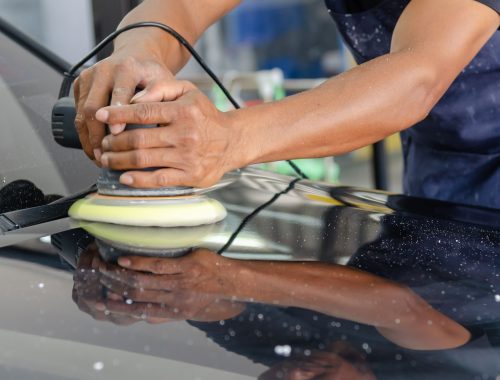
Yes, for most owners who care about their paint’s long-term appearance — the added time investment is modest (straight-line motion and careful drying add only a few extra minutes compared to a rushed wash), while the swirl-mark reduction compounds meaningfully over dozens of washes across a car’s ownership life. If you’ve already accumulated visible swirl marks from past washing habits, our guide on polishing a car covers the paint correction process to remove existing damage before adopting this method going forward.
Frequently Asked Questions
Is the scratch-free method significantly slower than a normal wash?
Only marginally — the added time comes mainly from more careful drying and slightly more deliberate mitt handling, not from additional steps, making it a reasonable habit change rather than a major time commitment.
Do air blowers work on all car sizes?
Most consumer air blowers handle sedans and smaller SUVs well, though larger trucks or vehicles may take longer or benefit from combining a blower with careful pat-drying on harder-to-reach areas.
Can this method fully prevent all swirl marks?
It significantly reduces the risk but doesn’t eliminate it entirely — environmental factors like windblown grit settling on the car between washes and normal handling over years still introduce some minor marking over time, even with careful technique.
Is this method worth it for an older car with existing swirl marks?
Yes — adopting scratch-free habits going forward prevents adding new damage on top of existing marks, and pairing it with a paint correction service to remove current swirls gives you a genuinely clean slate to maintain.
The Bottom Line
The scratch-free wash method centers on minimizing friction at every step: the two-bucket system, straight-line washing motions, careful pat-drying or an air blower, and quality microfiber tools maintained properly. It’s genuinely worth adopting for most car owners, since the extra effort is modest while the long-term paint preservation benefit compounds significantly over years of regular washing.
Already dealing with swirl marks that need correction? Contact San Diego Bumper and Collision for a professional assessment.