The fastest way to get dog hair out of a car is to loosen it before you vacuum, not after. A damp rubber glove, a squeegee, or a pumice stone dragged across upholstery pulls embedded hair up to the surface where a vacuum can actually reach it. Vacuuming first, which is what most people do, barely touches hair that’s woven into fabric.
Here’s the sequence that works, in order, plus the spots people always miss.
Key Takeaways
- Loosen first, lift second, vacuum last. Vacuuming embedded hair without agitating it first is the most common wasted effort.
- A damp rubber glove or a rubber squeegee is more effective on woven upholstery than any vacuum attachment.
- A fabric softener and water mist (roughly 1 part softener to 3 parts water) relaxes fabric fibers and releases stubborn hair.
- A pumice stone works on carpet and floor mats, but keep it off leather, vinyl, and headliners.
What You’ll Need
Almost all of this is already in your house.
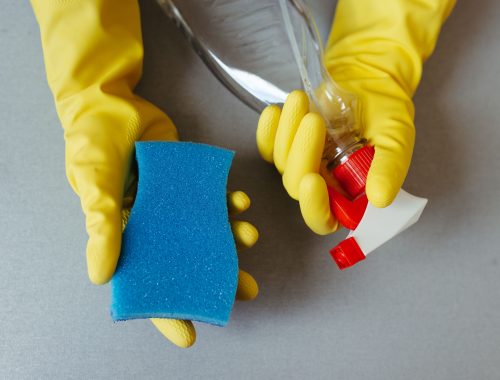
- Rubber dishwashing gloves, or a rubber-edged squeegee
- A stiff-bristle brush (a clean scrub brush works)
- Spray bottle with water and liquid fabric softener
- Packing tape or a lint roller
- Vacuum with a crevice tool and a brush or pet-hair attachment
- Pumice stone (carpet and mats only)
- Microfiber towels
Which Tool for Which Surface?
Using the wrong tool on the wrong material is how a cleaning session turns into a repair. This is the short version:
| Surface | Best tool | Avoid |
|---|---|---|
| Cloth seats | Damp rubber glove, squeegee, stiff brush | Pumice stone |
| Carpet and floor mats | Pumice stone, then vacuum | — |
| Leather seats | Damp microfiber towel | Brush, pumice, tape |
| Headliner | Lint roller, light vacuum | Anything abrasive or wet |
| Seat seams and rails | Vacuum crevice tool | Pumice, hard scraping |
| Air vents | Soft detailing brush + vacuum | Compressed air indoors |
Step 1: Loosen the Hair Before You Vacuum
This is the step that determines whether the rest works.
Dampen a rubber glove — barely damp, not dripping — and drag your hand across the seat in one consistent direction. Hair balls up into visible clumps you can pick off by hand. A rubber squeegee does the same thing faster on flat surfaces, gathering hair into rows.
For hair that’s genuinely woven into the weave, work a stiff-bristle brush across the fabric in short strokes. You’re not scrubbing a stain; you’re raising the fibers so trapped hair comes loose.
On carpet and floor mats, a pumice stone is the strongest tool available. Drag it lightly in one direction and it catches hair that nothing else will. Do not use it on leather, vinyl, Alcantara, or the headliner — it will abrade all of them.
Step 2: Lift What’s Now Loose
Once hair is sitting on the surface, get it off before it settles back in.
Wrap packing tape around your hand with the sticky side facing out and press it onto the fabric. Lift, don’t drag. A lint roller does the same job with less improvisation, though tape holds up better against thick undercoat hair. Stick to packing tape or a lint roller rather than duct tape — duct tape’s adhesive can transfer onto some upholstery, and test any tape in a hidden spot first.
Pick up the clumps the squeegee made by hand. It feels crude, but it removes far more hair per minute than a vacuum at this stage.
Step 3: Mist Stubborn Areas With Fabric Softener
For hair that’s still locked into the weave, mix roughly one part liquid fabric softener to three parts water in a spray bottle — a ratio widely used by detailers for this exact purpose (Chemical Guys interior guide). Mist the area lightly — you want it damp, not soaked — wait a moment, then wipe with a microfiber towel or go over it again with the rubber glove.
The softener relaxes the fabric fibers and reduces the static charge holding hair in place. Test on a hidden section first if your upholstery is light-colored or unusual, and never saturate the fabric: water that reaches the foam underneath takes days to dry and can leave a smell worse than the hair.
Step 4: Vacuum With the Right Attachment
Now the vacuum earns its keep. Use a brush or dedicated pet-hair attachment rather than a bare hose end — the bristles keep agitating fibers while suction pulls hair away.
Work in overlapping passes in one direction, then repeat perpendicular to the first pass. Hair lies directionally in fabric, and a single-direction pass leaves a surprising amount behind.
Switch to the crevice tool for seat seams, the gap between seat cushion and backrest, and along the seat rails. A shop vacuum outperforms a household vacuum here by a wide margin, and most self-service car washes have one on site — see our guide to using a self-service car wash bay for what to expect from those.
Step 5: The Spots Everyone Forgets
Hair migrates. After the seats look clean, check:
- Seat rails and the tracks underneath — hair accumulates in the mechanism and works its way back out.
- Seat belt webbing and the retractor slot — wipe the belt down with a damp cloth as you pull it out slowly.
- The gap between the seat and center console — crevice tool territory.
- Air vents — hair gets pulled into the cabin air path and blows back out. A soft detailing brush plus vacuum works.
- The cabin air filter — if you drive a dog regularly and the interior smells even after cleaning, this filter is usually the reason.
- The headliner and rear parcel shelf — a lint roller only; nothing abrasive.
- Trunk carpet and spare tire well — if the dog rides back there, hair collects under the floor panel.
How to Keep Hair From Coming Back
Cleaning is easier than re-cleaning. A few things meaningfully reduce how much hair ends up in the upholstery in the first place:
- A fitted seat cover or hammock. The single highest-impact change. A removable, washable barrier means you’re laundering a cover instead of detailing a seat.
- Brush the dog before the drive, not after. Five minutes outside removes hair that would otherwise end up in your car.
- Cargo liner for the trunk. Same principle as a seat cover, for hatchbacks and SUVs.
- Rubber floor mats. Hair sits on top instead of embedding, and they hose off.
- Clean more often, less thoroughly. A two-minute pass with a rubber glove every week never lets hair work deep into the weave.
Hair that has been ground into upholstery for years may not come out completely with household methods. At that point professional interior detailing — deep extraction, upholstery shampoo, and carpet cleaning — is the realistic option.
Frequently Asked Questions
What is the single best tool for removing dog hair from car seats?
A damp rubber glove, for cost and effectiveness combined. It costs almost nothing, works on cloth upholstery better than most vacuum attachments, and needs no technique to learn. A rubber squeegee is faster on large flat surfaces; a pumice stone is stronger on carpet and mats.
Does the fabric softener trick actually work?
Yes, for hair embedded in woven fabric. Diluted fabric softener relaxes fibers and cuts the static that holds hair in place. Use it sparingly, keep the fabric damp rather than wet, and test an inconspicuous spot first on light or delicate upholstery.
Will a pumice stone damage my car’s interior?
It will damage leather, vinyl, Alcantara, and headliner material. On carpet and rubber-backed floor mats it’s safe and highly effective when dragged lightly in one direction. Keep it strictly to those surfaces.
How do I get dog hair out of leather seats?
Leather is the easy case, because hair sits on top rather than weaving in. A microfiber towel dampened with water removes almost all of it. Follow with a leather-safe conditioner. Skip the brush, pumice stone, and tape — all three can mark the finish.
Why does my car still smell like dog after cleaning?
Usually the cabin air filter, the carpet padding underneath, or hair trapped in the vents. Replace the cabin filter first, since it’s inexpensive and often the whole answer. If the smell persists, moisture in the carpet padding is the likely source and needs extraction cleaning.
The Bottom Line
Loosen, lift, then vacuum — in that order. A damp rubber glove or squeegee does more real work than any vacuum attachment, diluted fabric softener handles what’s genuinely embedded, and a pumice stone finishes carpet and mats. Then check the seat rails, belts, vents, and cabin filter, because that’s where the hair you thought you removed is hiding.
A clean interior also makes it easier to spot damage you’d otherwise miss. If your inspection turns up a torn seat, cracked trim, or body damage that needs attention, contact San Diego Bumper and Collision for an estimate.