
To test an O2 sensor, warm the engine to normal operating temperature, set a multimeter to DC millivolts, back-probe the sensor’s signal wire with the red lead and connect the black lead to a good ground, then watch the reading. A healthy upstream sensor fluctuates continuously between about 0.1V and 0.9V as it reports the air-fuel mixture — a flat, unchanging reading (or no voltage at all) means the sensor has failed.
Here’s the full testing procedure, how to find the right sensor if your engine has more than one, and what the codes it triggers actually mean.
Key Takeaways
- A good upstream O2 sensor’s voltage swings constantly between roughly 0.1V and 0.9V — a steady, unmoving reading signals a bad sensor.
- Test hot, not cold. O2 sensors need to reach operating temperature before their readings mean anything.
- Codes P0130 and P0135 point to a sensor circuit problem and a failed heater circuit, respectively — different failures with the same root component.
- Ignoring a bad O2 sensor risks catalytic converter damage, since it directly controls the air-fuel mixture the converter depends on.
How to Test an O2 Sensor with a Multimeter
- Start the engine and let it idle for 5-10 minutes to bring it to normal operating temperature — O2 sensors need heat to function, and testing cold gives a meaningless reading.
- Set your multimeter to DC millivolts (or the 2V DC range), not AC — an easy mistake that produces garbage readings.
- Back-probe the sensor’s signal wire with the red lead, using a probe that pierces the wire’s insulation without disconnecting the harness, and connect the black lead to a solid ground point on the engine or chassis.
- Watch the voltage reading with the engine idling. A working upstream sensor should swing continuously — roughly between 0.1V and 0.9V, cycling several times per second as it reports rich and lean conditions to the ECU (CarParts.com).

What the Reading Actually Tells You
| Multimeter reading | What it means |
|---|---|
| Fluctuating between ~0.1V and 0.9V | Healthy — sensor is responding to mixture changes |
| Steady, unchanging voltage | Bad — sensor is stuck, not reporting real conditions |
| No voltage at all | Bad — dead sensor, broken wire, or no ground |
| Slow, sluggish switching | Aging sensor — often precedes a full failure |
If the signal checks out but you still suspect a problem, test the heater circuit separately: disconnect the sensor’s harness, set the multimeter to ohms, and measure resistance across the heater circuit terminals. It should fall within the range your vehicle’s service manual specifies — typically 3 to 15 ohms (Easy Car Electrics). A reading outside that range, or infinite resistance, points to a failed heater element even if the sensing element itself still works.
Finding the Right Sensor: Bank 1, Bank 2, Upstream, Downstream
Modern vehicles often have more than one O2 sensor, and the naming convention trips people up constantly. Bank 1 is the side of the engine containing cylinder #1; Bank 2 is the opposite side (inline 4-cylinder engines only have one bank, so every sensor is “Bank 1”). Within each bank, Sensor 1 is upstream — positioned before the catalytic converter, closest to the engine — and Sensor 2 is downstream, positioned after the converter (1A Auto).
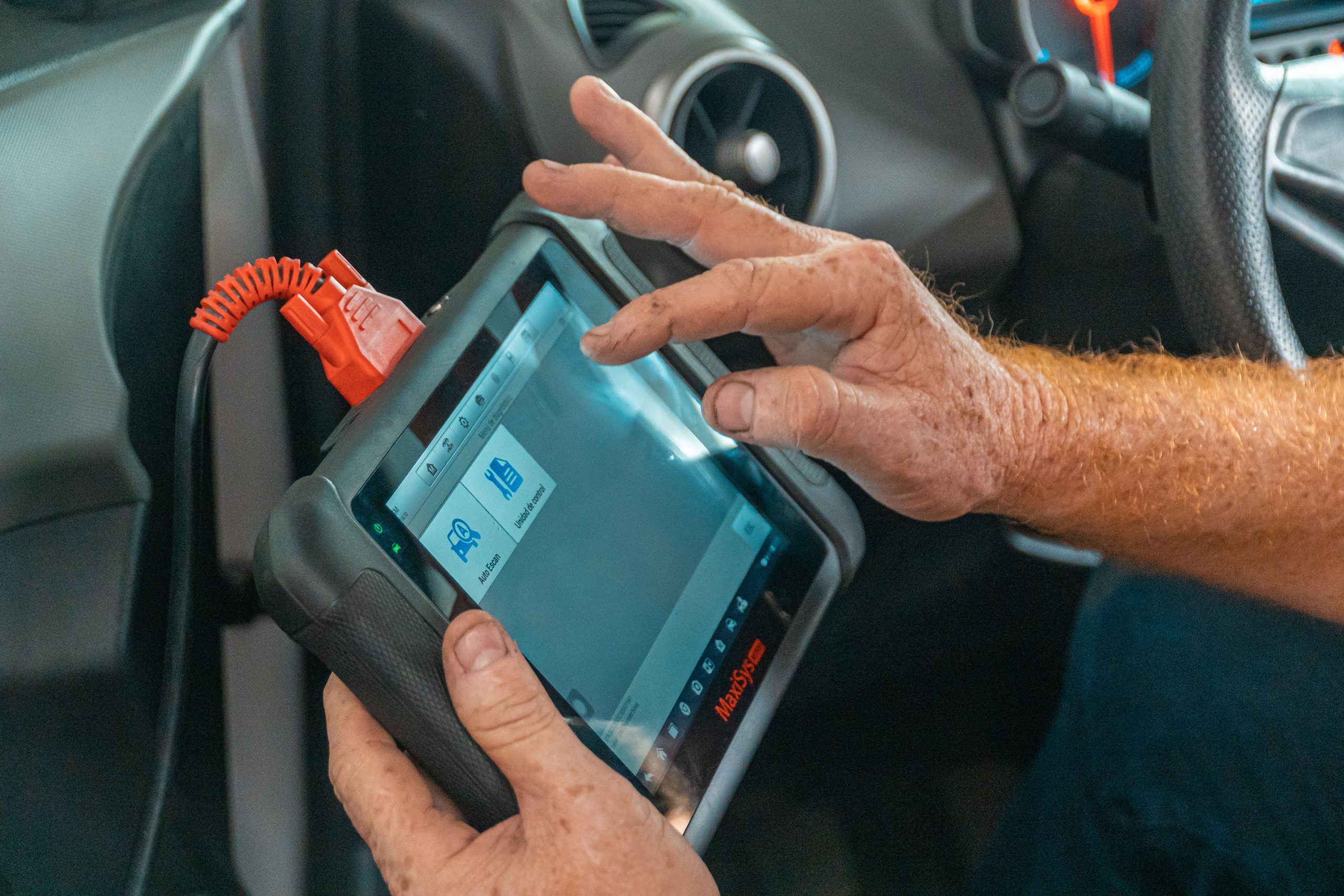
This matters for testing because upstream and downstream sensors behave differently even when both are healthy. Upstream sensors should swing actively, since they’re measuring raw exhaust before treatment. Downstream sensors are checking the catalytic converter’s efficiency, so a healthy downstream reading is comparatively flatter and slower to change — don’t apply the upstream fluctuation standard to a downstream sensor reading.
Signs of a Bad O2 Sensor
- A check engine light, often with a code like P0130 (sensor circuit malfunction) or P0135 (heater circuit malfunction).
- Noticeably worse fuel economy, since the ECU can’t correctly adjust the air-fuel mixture without accurate sensor data.
- Rough idle or occasional misfires.
- A rotten-egg or strong gasoline smell from the exhaust.
- Failed emissions or smog inspection, since the sensor is central to how the system verifies mixture control (Kemso Racing).
The most important reason not to ignore any of these: a bad O2 sensor lets the engine run consistently too rich or too lean, and either condition can overheat and permanently damage the catalytic converter — turning a $100-$300 sensor fix into a much larger repair if it’s left unaddressed.
Frequently Asked Questions
Can I test an O2 sensor without a multimeter?
An OBD-II scanner can show live sensor data on many vehicles, which is often easier to read than back-probing with a multimeter, especially for a quick check. A multimeter test is more precise for confirming an intermittent or borderline sensor.
How many O2 sensors does my car have?
Most 4-cylinder engines have two (one upstream, one downstream). V6 and V8 engines typically have four — one upstream and one downstream per bank — though some vehicles with multiple catalytic converters have more.
Does a bad purge valve affect O2 sensor readings?
Indirectly, yes. A stuck-open purge valve introduces extra, unplanned vapor into the intake, which throws off the air-fuel ratio the O2 sensor is reporting on — sometimes mimicking sensor failure symptoms even though the sensor itself is fine.
How long do O2 sensors typically last?
Many last 60,000-100,000 miles depending on the vehicle and driving conditions, though oil-fouling, contaminated fuel, or a failing engine component can shorten that significantly. Replace them proactively around your manufacturer’s interval rather than waiting for a failure code.
The Bottom Line
Test an O2 sensor hot, with a multimeter set to DC millivolts on the signal wire — a healthy upstream sensor swings continuously between roughly 0.1V and 0.9V, while a flat or missing reading means it’s failed. Know which sensor you’re testing (bank, upstream vs. downstream) before judging the reading, since the expected behavior differs by position. A code like P0130 or P0135 is worth acting on quickly, since a bad sensor can take your catalytic converter down with it.
Getting a P0130 or P0135 code and not sure which sensor is at fault? Contact San Diego Bumper and Collision for a proper diagnostic before replacing parts on a guess.