Choose between compound and polish by matching the product’s cutting level to your actual paint defect severity — always start with the least aggressive option that could work. A polish offers low-to-medium cut for light swirl marks and finishing work, an all-in-one (AIO) product combines mild cutting with polishing and protection, and a heavy-cutting compound is reserved for genuinely deep defects like 1500-2000 grit sanding marks, deep scratches, or severe oxidation.
Here’s how the three product tiers actually differ, and why starting too aggressive is a mistake that costs you paint you can’t get back.
Key Takeaways
- Always try the least aggressive process first — factory paint is thin, and aggressive compounds remove more of it than necessary for minor defects.
- Polishes offer low-to-medium cut, ideal for light defects or finishing after a compound has already removed deeper damage.
- Heavy-cutting compounds handle severe defects — deep scratches, stubborn swirl marks, and years of oxidation — but remove noticeably more clear coat.
- All-in-one products trade some cutting power for the convenience of combining correction and protection in a single step.
The Three Product Tiers
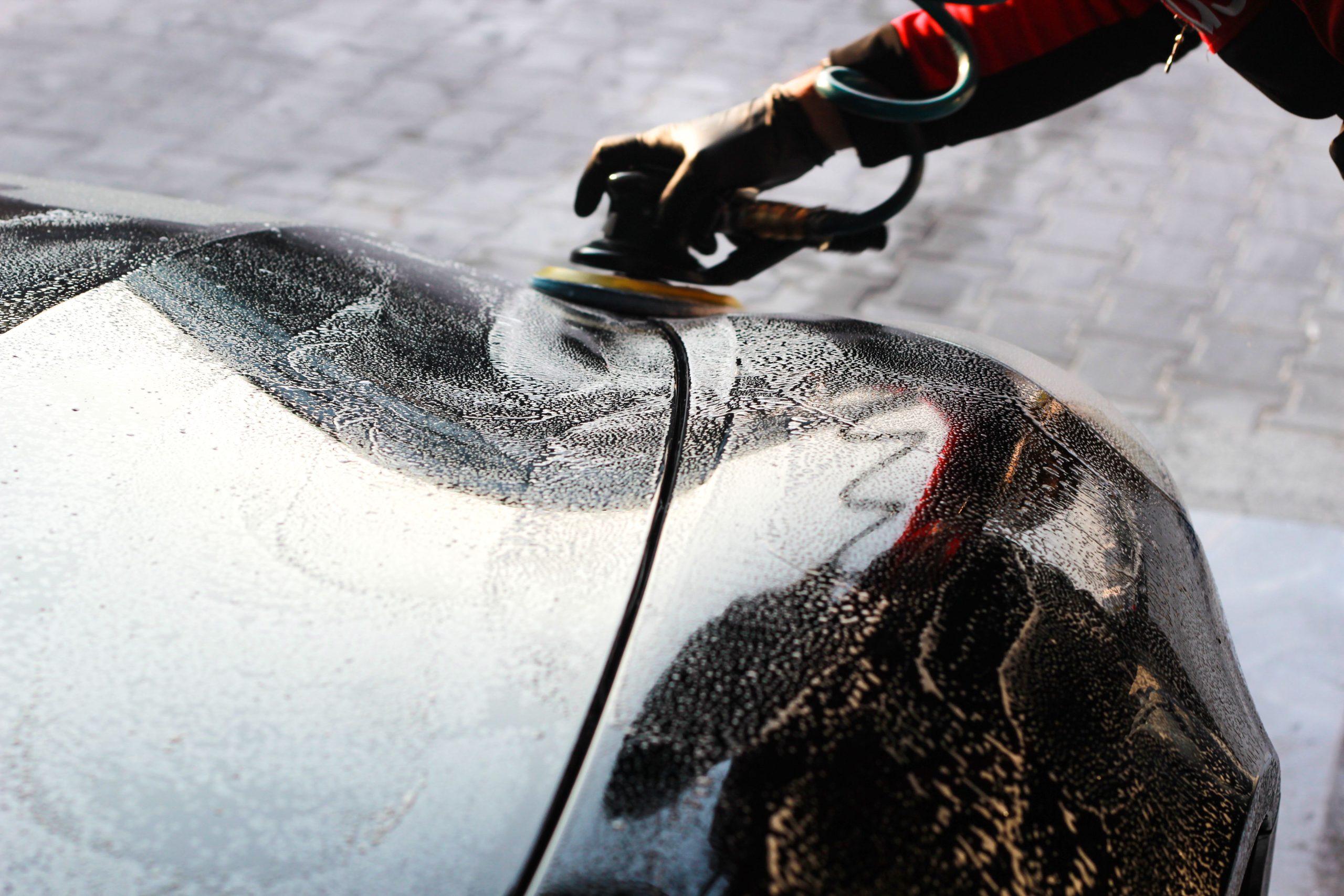
There are three main types of abrasive products for paint correction. Polishes are the most common, typically offering low-to-medium cut, best used on light defects or for finishing after a compound has already removed deeper damage (Titan Coatings). All-in-one (AIO) products combine cutting, polishing, and protection in a single formula, but are generally less aggressive than a dedicated polish since they’re designed to accomplish three tasks simultaneously rather than specializing in one.
Understanding “Cut”
Cut refers to a compound’s raw power to slice through paint defects — heavy-cutting compounds use larger, more aggressive abrasives to quickly level out deep scratches, stubborn swirl marks, and years of accumulated oxidation (Dr. Beasley’s). Heavy-cut compounds represent the most aggressive tier, appropriate for major defects like 1500-2000 grit sanding marks, deep scratches, or severe water spot etching that a gentler polish simply can’t level in a reasonable timeframe.
Why You Should Always Start Gentle
Since factory paint is genuinely thin, always try the least aggressive process possible — a polish paired with a soft foam pad — before escalating to compounds that remove more paint (Titan Coatings). This matters because clear coat thickness is finite and non-renewable through normal correction work; every aggressive cutting pass removes a small amount permanently, and there’s a real limit to how many correction cycles a panel can withstand over its lifetime before the clear coat becomes dangerously thin.
The practical strategy is matching cutting level to actual defect severity — start with a finer polish for light swirl marks or minor haze, and only move to a heavier compound if the defects genuinely require more aggressive correction to actually resolve. If you’re not sure how to assess your specific paint condition first, our guide on removing scratches from a car covers the fingernail test that helps determine defect depth before choosing a product.
How This Fits Into a Full Correction Process
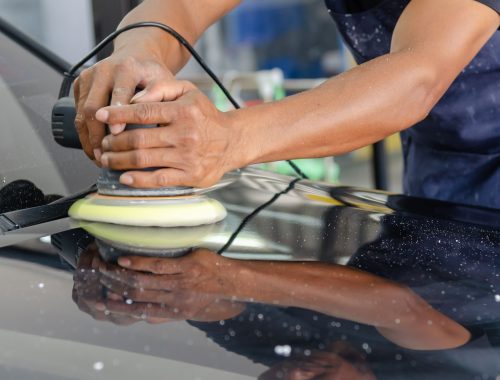
Compound and polish work together in sequence during a genuine paint correction — compound first to level deeper defects, polish afterward to refine the finish and remove any minor haze the compound itself introduced. Our guide on polishing a car step by step covers this full sequence, including where clay bar work and final wax or sealant application fit relative to compound and polish steps.
Frequently Asked Questions
Can I use a compound by hand, or does it require a machine polisher?
Heavier-cut compounds are generally far more effective and consistent with a machine polisher, since hand application struggles to generate the consistent pressure and speed needed for genuine cutting — light polishes are more forgiving of hand application.
How do I know if I’ve used too aggressive a product?
Visible holograms, excessive haze that doesn’t clear with a finishing polish, or noticeably thinner-feeling paint in the treated area are signs the cutting level was more aggressive than the defect actually required.
Do all-in-one products work for genuinely deep scratches?
Generally not well — their moderate cutting level is designed for light-to-medium defects combined with convenience, not for resolving deep scratches that need a dedicated heavy-cut compound first.
How often does a car need a full compound-and-polish correction?
There’s no fixed schedule — it depends entirely on how much swirl marks and defects accumulate from washing and environmental exposure, with many owners doing a full correction every 1-3 years depending on how carefully the paint is maintained between corrections.
The Bottom Line
Choosing between compound and polish comes down to matching cutting level to actual defect severity: polish for light issues and finishing, an all-in-one for convenience with moderate defects, and a heavy-cutting compound reserved for genuinely deep damage. Since clear coat is thin and non-renewable, always start with the gentlest option that could realistically work before escalating to something more aggressive.
Unsure which correction level your paint actually needs? Contact San Diego Bumper and Collision for a professional assessment.