
Protect your car from sun damage by covering four exposure zones: wax paint every three months with a UV-inhibitor product (more often if parked outdoors or in a sunny climate), apply window tint that blocks up to 99% of UV rays to protect both the interior and your skin, use dashboard covers and UV-protectant interior dressing to prevent cracking and fading on plastic and leather surfaces, and apply tire dressing regularly since UV degrades rubber compounds over time. Parking in shade whenever possible, or using a quality car cover, reduces sun exposure across all four zones at once rather than relying on product application alone.
Here’s how each exposure zone needs a genuinely different protection approach, and why parking strategy does more preventive work than any single product.
Key Takeaways
- Wax with UV inhibitors every three months — more frequently if parked outdoors or in intense sun.
- Quality window tint blocks up to 99% of UV rays, protecting both interior materials and occupants.
- Dashboard covers and UV interior dressing prevent cracking on plastic and leather that direct sun exposure otherwise causes.
- Tire rubber degrades under UV exposure too — dressing and proper storage both help slow this process.
Four Zones That Need UV Protection
Protecting Paint and Windows

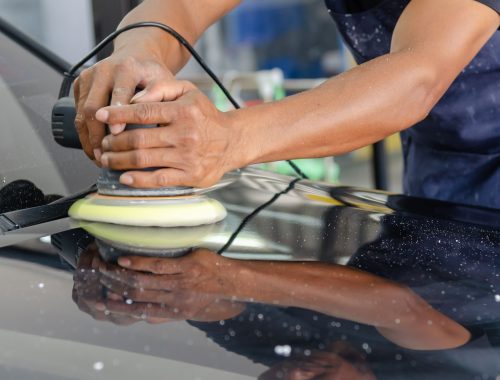
Wash and wax your car regularly to create a protective barrier, choosing a high-quality wax that contains UV inhibitors specifically designed to protect paint from sun exposure (Neighbor). It’s best to wax every three months, more frequently if you park outdoors or live in a particularly sunny climate. Our guide on how to wax your car covers the application process, and for even stronger, longer-lasting UV resistance, our guide on ceramic coating vs. wax covers how a bonded coating compares on this specific protection. Window tints block UV rays and reduce heat buildup, with quality tints capable of blocking up to 99% of UV rays while preserving interior upholstery — our guide on cleaning tinted windows without damaging the film covers maintaining that protective layer once it’s installed.
Protecting Interior Surfaces

Invest in quality seat covers that resist UV rays, and use dashboard covers to protect against the cracking and fading that direct sun exposure causes over time (US Car Cover). Wipe interior plastic and leather surfaces with a UV-protectant interior dressing to help prevent fading, drying, and cracking — this matters especially for the dashboard, which faces the most direct and sustained sun exposure of any interior surface. If your dashboard has already developed damage from unprotected sun exposure, that’s a separate restoration problem worth addressing before ongoing UV protection can do its preventive job effectively.
Protecting Tires
UV degrades rubber compounds in tires, which is exactly why tire dressings and proper storage both matter for tire longevity, not just appearance (Tire Advise). Our guide on cleaning tires and adding shine covers the dressing application process that pulls double duty as both a cosmetic finish and a genuine UV protectant for the rubber underneath.
Frequently Asked Questions
Does parking in a garage fully eliminate the need for UV protection products?
It significantly reduces exposure but doesn’t fully eliminate the need, since most vehicles still spend meaningful time parked outdoors or driving during daylight hours regardless of overnight garage storage.
Can sun damage to paint be reversed once it’s already faded?
Mild fading can often be improved with polishing and a fresh protective layer, but severe UV oxidation may require professional paint correction or, in extreme cases, repainting to fully resolve.
Is a car cover worth the cost compared to just parking in shade?
A car cover is worth it specifically when shaded parking isn’t consistently available, since it provides similar UV blocking benefits regardless of where the vehicle is actually parked.
Do darker-colored cars suffer more visible sun damage than lighter colors?
Yes, generally — darker paint absorbs more heat and can show fading and oxidation more visibly over time compared to lighter colors, making UV protection especially worthwhile for dark-colored vehicles.
The Bottom Line
Protecting your car from sun damage comes down to covering all four exposure zones — paint, windows, interior, and tires — with the right product for each, while using shaded parking or a car cover to reduce overall exposure whenever possible. Consistent, zone-specific protection prevents the fading, cracking, and degradation that unprotected sun exposure causes across the entire vehicle over time.
Want your car professionally protected against sun and UV damage? Contact San Diego Bumper and Collision for a quote.