A failing rack and pinion shows up as steering that feels stiff, loose, or has a “dead spot,” a reddish power steering fluid leak, or grinding and clunking noises when turning — and because this assembly is central to how the car actually steers, none of these are symptoms to wait out. Left unaddressed, a bad rack and pinion can progress to a genuine loss of steering control.
Here’s how to tell it’s the rack and pinion specifically, what a repair versus a full replacement costs, and why most leaks end up needing the whole assembly replaced anyway.
Key Takeaways
- Steering that’s stiffer, looser, or has an unresponsive “dead spot” are the core symptoms, along with clunking, grinding, or popping noises when turning.
- A reddish fluid leak underneath the front of the car, often with a burning smell, points to failed seals inside the rack and pinion.
- Repairing a leak alone runs $500-$1,200, but most leaks eventually require full replacement anyway once internal wear is involved.
- Full replacement runs $800-$2,000 depending on the vehicle and whether parts are OEM or aftermarket.
What the Rack and Pinion Actually Does
The rack and pinion converts the rotating motion of your steering wheel into the side-to-side motion that actually turns the front wheels. The “pinion” is a small gear connected to the steering column; the “rack” is a long, toothed bar it meshes with. Turn the wheel, the pinion rotates, and the rack slides left or right — simple mechanically, but everything about how the car steers runs through this one assembly.
That centrality is exactly why symptoms here matter more than in most other components. A worn control arm or sway bar link causes a noise or a handling quirk. A failing rack and pinion can progress toward an actual inability to steer predictably.
Signs of a Bad Rack and Pinion
- Stiff or heavy steering, harder to turn than it used to be, especially at low speed or when parking.
- Loose or less responsive steering — the opposite problem, where the wheel doesn’t translate cleanly into the front wheels turning.
- A “dead spot” — a specific position where the steering wheel turns but the front wheels don’t respond, a distinctive and unmistakable symptom once you’ve felt it.
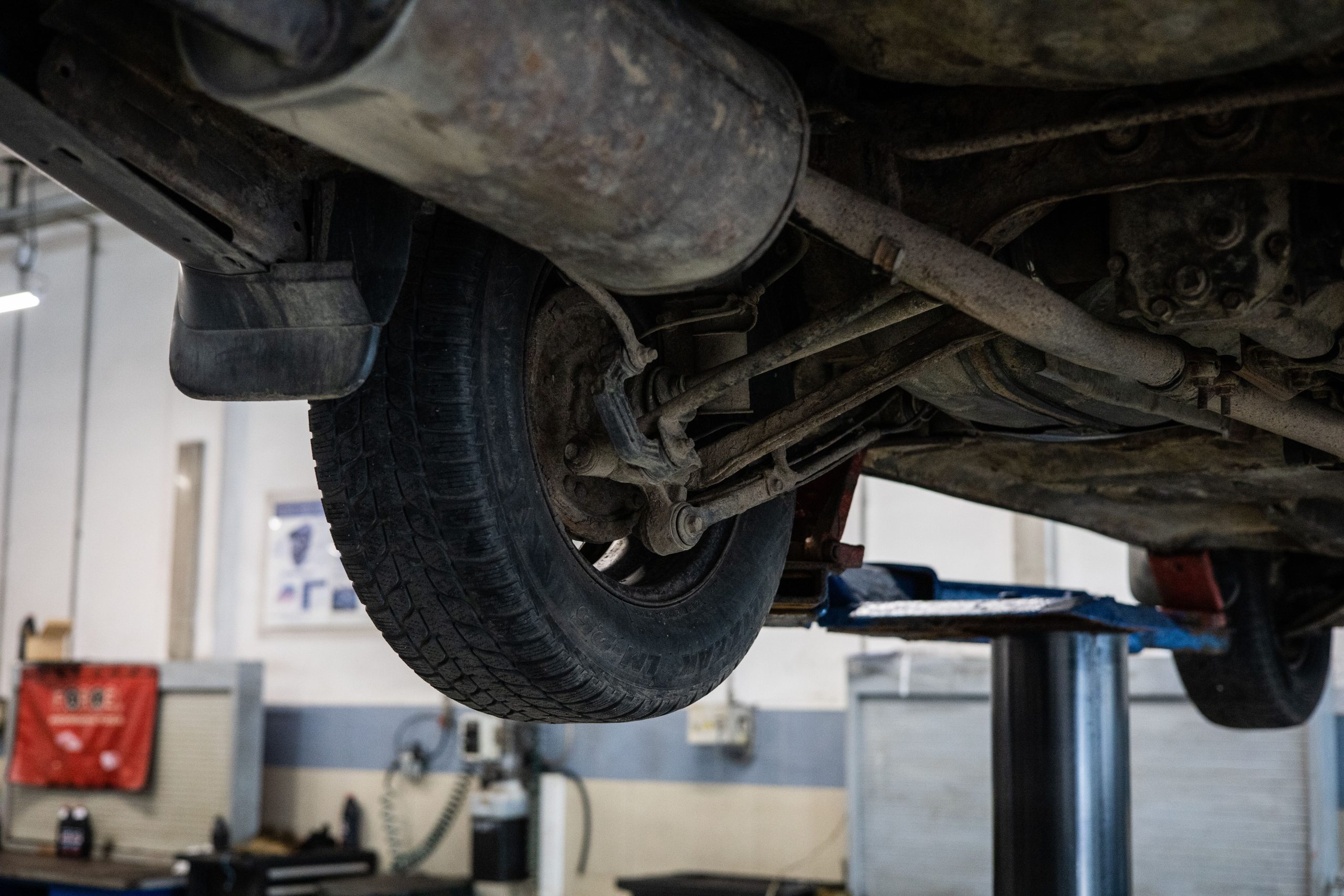
- Knocking, popping, clunking, or grinding noises when turning, with grinding specifically suggesting internal parts are running dry from a lack of lubrication.
- Steering wheel shaking or vibrating, even on smooth pavement.
- Total loss of steering assist on electric power steering systems, a more severe failure mode than the gradual symptoms above (AutoNation Mobile Service).
The Fluid Leak Symptom, Specifically
Power steering fluid — usually reddish or pinkish — leaking from under the front of the car is one of the clearest single indicators of a rack and pinion problem, caused by failing seals inside the assembly. A leak often comes paired with a burning smell, since the fluid overheats as hydraulic pressure and lubrication both degrade (Car From Japan).
This symptom overlaps with a bad power steering pump, since both use the same fluid and both can leak it. The distinguishing detail is usually location: a rack and pinion leak tends to show up centered under the middle of the car near the steering components, while a pump leak is closer to the engine bay where the pump itself is mounted.
Repair or Replace? What It Actually Costs
Leak repair alone — replacing seals without swapping the whole unit — runs roughly $500-$1,200. Full assembly replacement runs $800-$2,000, with parts alone ranging from about $125 for basic aftermarket units to well over $1,500 for OEM parts on some vehicles, before labor (AutoZone).
The catch: most leaks don’t stay a simple seal fix. If internal gears, hydraulic passages, or other components inside the rack have already worn alongside the seals, a repair often turns into a short-term patch that fails again once the rest of the unit catches up — which is why replacement is frequently the better long-term call even though it costs more upfront (Detroit Axle).
Frequently Asked Questions
Can I drive with a bad rack and pinion?
Briefly, cautiously, and only to get it inspected — not as an ongoing plan. Because steering runs entirely through this component, symptoms can worsen suddenly, and losing steering assist or control at speed is a real safety risk rather than a comfort issue.
Is a rack and pinion leak the same as a tie rod problem?
No, though they’re connected in the steering system. The tie rod links the rack to the wheel and wears from mechanical play rather than fluid leaks. A rack and pinion problem is more likely to show a fluid leak or a dead spot; a tie rod problem shows up more as loose, wandering steering and uneven tire wear.
How long does a rack and pinion last?
Many last the life of the vehicle under normal conditions, but seal wear, contaminated fluid, or a curb strike or collision can shorten that significantly. There’s no fixed mileage interval — it’s a wear-and-condition item rather than scheduled maintenance.
Does a rack and pinion replacement need an alignment?
Yes. Replacing the assembly changes the steering geometry enough that skipping the alignment afterward leads to uneven tire wear, the same logic that applies to a tie rod or control arm replacement.
The Bottom Line
A rack and pinion going bad shows up as stiff or loose steering, a dead spot in the wheel, clunking or grinding noises, or a reddish fluid leak with a burning smell. Repairing a leak alone runs $500-$1,200, but full replacement at $800-$2,000 is often the more durable fix once internal wear is involved — and given that this component controls your actual ability to steer, it’s not one to defer.
Noticing a dead spot, a leak, or steering that feels off? Contact San Diego Bumper and Collision for an inspection before it progresses.