Clean car seats by vacuuming thoroughly first, then treating the material differently based on what it is: fabric seats respond well to a misted upholstery cleaner scrubbed gently with a soft brush and rinsed with a damp microfiber towel, while leather seats need a pH-neutral cleaner applied to a cloth (never sprayed directly), followed by conditioner to keep the material from drying out and cracking.
Here’s the full process for both material types, the mistakes that cause real damage, and how to actually dry seats without inviting mold or mildew.
Key Takeaways
- Vacuum thoroughly before applying any cleaner — skipping this grinds dirt and grit into the material during cleaning instead of removing it.
- Leather needs cleaner applied to a cloth, not sprayed directly — followed by conditioner every few months to prevent cracking.
- Fabric seats need to dry completely, windows cracked or a fan running, to avoid trapped moisture causing mold or a musty smell.
- Never use bleach, ammonia, or harsh solvents on either material — both can cause real, sometimes permanent damage.
Start With a Thorough Vacuum
Vacuum the seat surface, crevices, and seat back before applying any cleaner — use a crevice tool along the seam where the cushion meets the seat back, where crumbs and debris collect most. This step matters for both fabric and leather: skipping it means grinding loose dirt and grit into the material while you scrub, working exactly like sandpaper against the surface (Dennis Auto Details).
Cleaning Fabric Seats
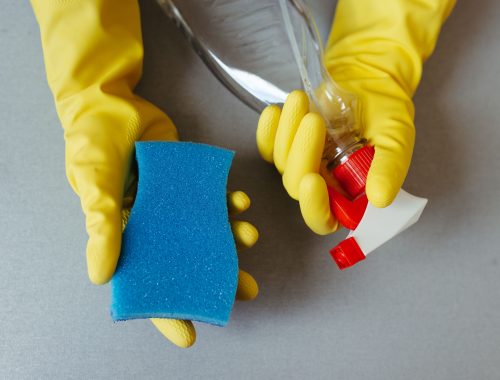
- Spray upholstery cleaner directly onto stains and let it sit for 3-5 minutes without rubbing, giving the product time to penetrate the fibers first.
- Scrub with a soft-bristle brush using small circular motions, working from the outside of the stain inward to avoid spreading it further.
- Apply light, consistent pressure rather than aggressive scrubbing, which can push the stain deeper into the fabric instead of lifting it out.
- Rinse by wiping with a damp microfiber towel to gather up cleaner residue and loosened dirt.
- Avoid oversaturating the fabric — too much liquid causes watermarks and, more seriously, can soak into the foam underneath.
Cleaning Leather Seats
Leather is less porous than cloth, so it doesn’t absorb spills and stains as easily — a fresh spill often wipes up with minimal effort. But leather hardens and cracks over time without proper care, which is exactly why the conditioning step matters as much as the cleaning step (Jalopnik).
- Test any cleaner on a small, hidden area first to confirm it won’t stain or discolor the leather’s finish.
- Apply pH-neutral leather cleaner to a microfiber cloth, not directly onto the seat — spraying straight onto leather risks oversaturating specific spots.
- Work the product into the surface using light circular motions, section by section.
- Wipe away residue with a dry microfiber towel, making sure no product is left sitting on the surface.
- Apply a quality leather conditioner with an applicator pad, let it absorb for 5-10 minutes, then buff lightly with a clean cloth (J.D. Power).
Fabric vs. Leather: Key Differences
| Aspect | Fabric | Leather |
|---|---|---|
| Stain absorption | Absorbs quickly, harder to fully lift once set | Resists absorption, easier to wipe up fresh |
| Long-term risk | Mold/mildew if not fully dried | Cracking and hardening if not conditioned |
| Cleaner application | Direct spray onto stains is fine | Apply to cloth first, never spray directly |
| Steam cleaning | Generally safe and effective | Too hot — can warp the material |
Mistakes That Cause Real Damage
- Household bleach, petroleum-based cleaners, or harsh solvents — these can severely damage both fabric and leather, sometimes permanently discoloring or degrading the material.
- Ammonia-based cleaners on leather — strips natural oils from the leather and damages its finish over repeated use.
- Over-wetting fabric seats — traps moisture inside the foam padding underneath, leading to a musty smell and fungal growth that’s genuinely difficult to fully remove once established.
- Steam cleaning leather — while steam works well on cloth, the heat is too intense for leather and can cause warping or finish damage.
Drying: The Step People Rush
Give fabric seats real time to dry completely, with windows cracked or a fan running to keep air moving through the cabin. Rushing this step — closing the car up right after cleaning — is one of the most common causes of a lingering musty smell, since trapped moisture in fabric and foam is exactly the environment mold needs to establish itself.
If odor has already set in from past moisture problems or another source entirely, our guide on removing smoke smell from a car covers the deeper interior odor removal process, much of which applies to musty or mildew smells too.
Frequently Asked Questions
Can I use the same cleaner on fabric and leather seats?
No — use products specifically formulated for each material. A leather-specific pH-neutral cleaner is too gentle to lift tough fabric stains, and a fabric upholstery cleaner can be too harsh or improperly formulated for leather’s finish.
How often should leather seats be conditioned?
Every few months under normal use, more often in hot, dry climates where UV exposure and heat accelerate moisture loss from the leather.
What’s the best way to remove pet hair before cleaning?
Loosen embedded pet hair before vacuuming rather than vacuuming alone — see our guide on getting dog hair out of a car for the specific loosen-lift-vacuum order that actually works on embedded hair.
What towels should I use for seat cleaning?
Clean microfiber towels, never ones previously used with fabric softener or dryer sheets, since residue from either can transfer onto seats and interfere with cleaner performance. See our guide on washing microfiber towels properly.
The Bottom Line
Cleaning car seats starts with a thorough vacuum regardless of material, then splits based on what you’re working with — fabric takes a misted cleaner and gentle scrubbing with full drying time after, while leather needs cleaner applied to a cloth rather than sprayed directly, followed by regular conditioning to prevent cracking. Skip bleach, ammonia, and harsh solvents on either material, and never rush the drying step on fabric.
Dealing with a stain or odor that basic cleaning hasn’t fixed? Contact San Diego Bumper and Collision for professional interior detailing.