Physically, yes, a car can run without a catalytic converter — but it’s illegal to drive that way in every state, and California enforces it more aggressively than most. Tampering with or removing emissions equipment violates the federal Clean Air Act, and California’s own Vehicle Code adds state-level fines on top of that. It won’t damage your engine in the short term, but it will trigger a check engine light, hurt performance, and expose you to penalties that can run into the thousands.
Here’s what actually happens to the car, what it costs if you get caught, and why removing it rarely delivers the performance gain people expect.
Key Takeaways
- Driving without a catalytic converter is illegal nationwide under the federal Clean Air Act, regardless of whether your state has its own inspection program.
- California penalizes tampering separately — up to $25,000 for individuals and $37,500 for businesses under state law, on top of any federal fine.
- Federal civil penalties can exceed $50,000 for a single vehicle, calculated per non-compliant part, per day.
- Removing the converter typically adds only 5-15 horsepower on a stock engine — a modest gain for a serious legal and financial risk.
Is It Actually Illegal?
Yes, everywhere. The Clean Air Act, Section 203(a)(3), prohibits removing or disabling any installed emissions control device, and that applies to individual vehicle owners, not just shops or manufacturers. The EPA has stated explicitly that owners who remove or disable a catalytic converter are violating federal law and subject to the same penalty structure as businesses that sell defeat devices (U.S. EPA).
California adds its own layer. Vehicle Code Section 27156 separately prohibits modifying or removing required emission control equipment, and the state pursues catalytic converter tampering aggressively — a car missing its converter won’t pass the visual, tailpipe, or OBD-II portions of a smog check, which means you can’t renew registration until it’s restored (Hottexhaust).
What It Actually Costs You If Caught
Federal civil penalties are calculated per non-compliant part, per day — up to roughly $5,580 under current EPA guidance — which is how a single deleted vehicle can rack up penalties exceeding $50,000 if enforcement drags on. Knowing violations can also trigger criminal penalties up to $25,000 per day plus up to a year in prison (Dub Magazine). California’s state-level fines apply on top of, not instead of, any federal exposure.
What Happens to the Car Itself
- The check engine light comes on almost immediately on any vehicle from 1996 or newer, since the OBD-II catalyst efficiency monitor detects the missing converter and stores a code.
- Louder exhaust, often dramatically so, since the converter also provides some sound-dampening along with its chemical function.
- Rougher, jerkier acceleration in many cases, as the engine computer reacts to sensor readings that no longer make sense without the converter in the loop.
- A stronger exhaust smell, since the gases leaving the tailpipe are no longer being chemically treated.
- A failed smog or emissions inspection, which blocks registration renewal in states like California that require one (SlashGear).
None of this damages the engine outright in the short term — the car will run. But “will run” and “runs well, legally, and without ongoing financial exposure” are very different standards. For the mechanics of what the converter is actually doing when it’s in place, see our guide to what a catalytic converter does.
Does Removing It Actually Improve Performance?
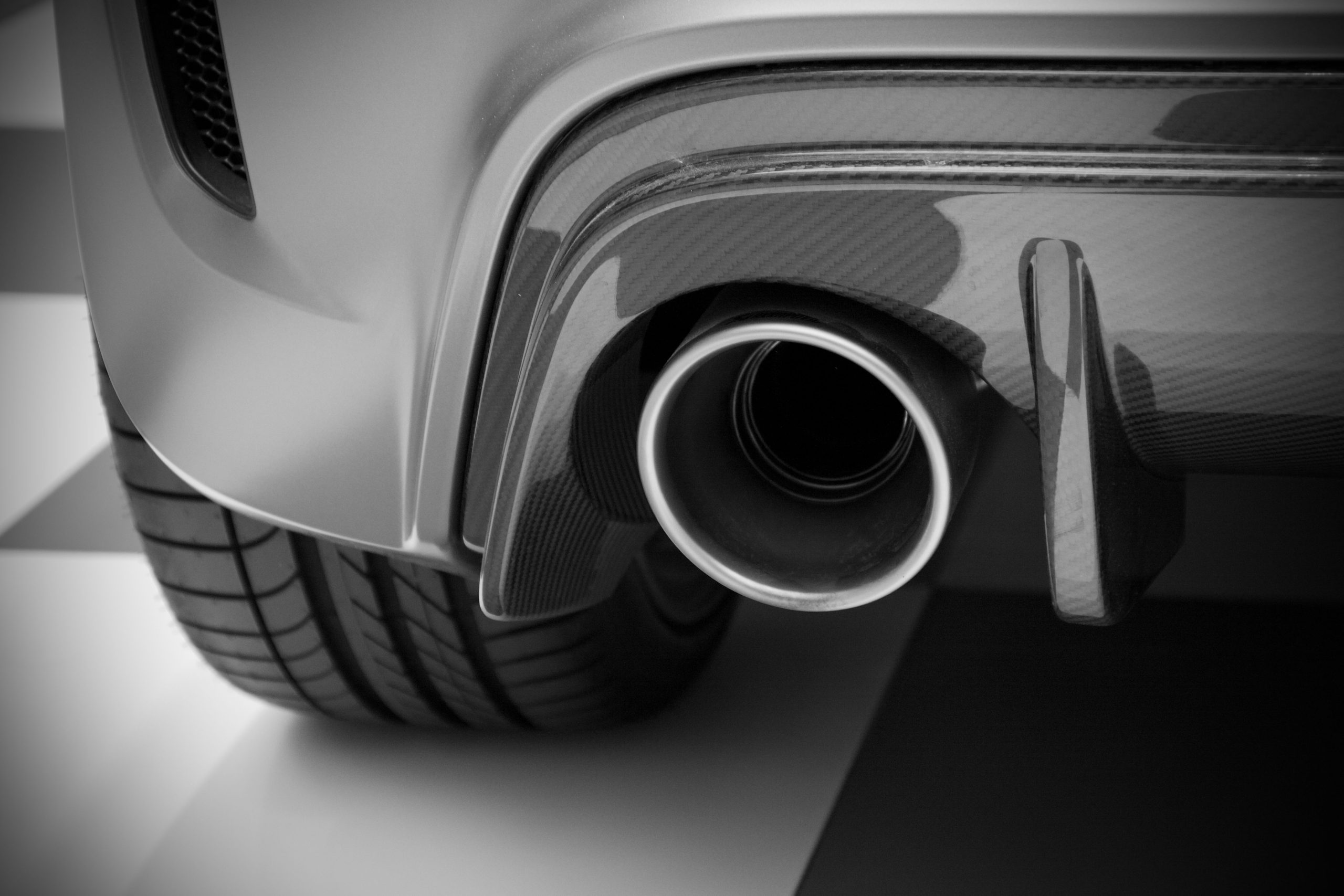
Marginally, and usually not enough to justify the risk. A catalytic converter creates some backpressure in the exhaust system, and removing it lets the engine breathe slightly more freely. In practice, that typically translates to 5-15 horsepower on a stock engine — noticeably more on heavily modified turbocharged builds, but a modest number on anything close to factory configuration (Catalytic Converter Care).
That gain comes bundled with an immediate check engine light, a failed inspection, a voided powertrain and emissions warranty from the dealership, and the fines described above. For most street-driven vehicles, it’s a poor trade — the performance upside is small and the downside is disproportionate.
Frequently Asked Questions
Will removing a catalytic converter hurt my engine?
Not immediately or mechanically — the engine will run without it, at least in the short term. The real costs are legal and financial rather than mechanical: fines, a failed inspection, and a voided emissions warranty.
Can a mechanic legally remove my catalytic converter for me?
No, and a legitimate shop should refuse. Installing a defeat device or performing tampering work exposes the shop to the same Clean Air Act penalties as the vehicle owner, plus additional liability as the business performing the work.
Is it legal to drive temporarily without one if it was stolen?
The law doesn’t carve out an exception for theft, but in practice, enforcement typically focuses on intentional tampering rather than owners actively working to replace a stolen part. Get it repaired as quickly as you reasonably can rather than continuing to drive on it long-term. See our guide on why catalytic converters get stolen for what to expect if yours was cut off.
Does a check engine light for a missing converter clear on its own?
No. It stays on until the converter is replaced and the system confirms proper catalyst efficiency over a normal drive cycle — there’s no way to clear it permanently without actually restoring the emissions equipment.
The Bottom Line
You can physically drive without a catalytic converter, but it’s illegal everywhere, and California layers state fines on top of federal ones that can exceed $25,000 for an individual and $50,000 in federal civil penalties for a single vehicle. The performance gain — typically 5-15 horsepower — rarely justifies that exposure, on top of a guaranteed check engine light and a failed smog check.
Missing or damaged catalytic converter? Contact San Diego Bumper and Collision to get it properly replaced and your emissions system back in compliance.