
Traction control works by using wheel speed sensors to detect when a drive wheel is spinning faster than the others, then reducing engine power and applying the brake to that specific wheel until it regains grip. It’s an active safety system focused entirely on acceleration — the moment you try to speed up on a surface that can’t support that much power.
Here’s exactly how the system detects and corrects wheel slip, how it differs from ABS and stability control, and when it actually kicks in.
Key Takeaways
- Traction control activates during acceleration, not braking — that’s the core difference from ABS.
- Wheel speed sensors, often shared with ABS, detect when one drive wheel spins significantly faster than the others.
- The system corrects slip two ways: reducing engine power first, then braking the specific spinning wheel if needed.
- It’s most active on low-friction surfaces — wet pavement, ice, snow, gravel, or sand — where available grip can’t match acceleration force.
The Core Job: Preventing Wheel Slip
Traction control is an active safety system designed to maintain grip between a vehicle’s tires and the road during acceleration, with the primary goal of preventing the drive wheels from spinning excessively — a condition called wheel slip (YourMechanic).
Wheel slip happens whenever the engine sends more torque to a wheel than the available road surface friction can handle. Without any intervention, that wheel spins freely instead of translating power into forward motion — which is exactly the moment traction control is built to catch and correct.

How the System Detects Slip
Wheel speed sensors, often shared with the anti-lock braking system, continuously monitor the rotational speed of each individual wheel. If a driven wheel is rotating significantly faster than the others, the system identifies that discrepancy as wheel slip in real time (AutoZone).
Beyond wheel speed, more advanced systems also draw on additional sensors: yaw rate sensors measure the car’s rotation to check whether its actual direction is drifting from the intended path, and throttle position sensors track how much acceleration the driver is applying, which helps the system anticipate wheel slip before it fully develops rather than only reacting after the fact.
How the System Corrects It
Once wheel slip is detected, the traction control system responds in stages. First, it reduces engine power to limit how much torque reaches the spinning wheel. If that alone isn’t enough to restore grip, the system applies the brake specifically to the slipping wheel — effectively “pumping” that individual brake to slow the wheel down and redistribute power toward the wheels that still have grip (Repairs Advisor).
This individual-wheel braking is what makes the system so effective in situations like pulling away on ice with one drive wheel on a dry patch and the other on a slick spot — power gets redirected toward the wheel that can actually use it, rather than the free-spinning one wasting the engine’s output.
Traction Control vs. ABS vs. Stability Control
| System | Active During | What It Does |
|---|---|---|
| ABS | Hard braking | Prevents wheels from locking up by releasing and reapplying brake pressure |
| Traction Control | Acceleration | Reduces engine power and brakes individual spinning wheels to prevent wheelspin |
| Stability Control | Cornering / any loss of directional control | Compares intended steering direction to actual vehicle path and brakes individual wheels to correct skidding |
These three systems are closely related but solve different problems. ABS keeps wheels from locking during hard braking. Traction control stops wheels from spinning during acceleration. Stability control is the most advanced of the three, adding a steering wheel position sensor and a more sophisticated yaw sensor to compare where the driver is steering against where the car is actually going, then braking individual wheels to correct the mismatch (SlashGear).
All three systems share the same underlying hardware — the wheel speed sensors and brake actuators that make up the ABS system — which is why they’re often bundled together and marketed as a single integrated safety package on modern vehicles. A worn front rotor can throw off that shared sensor data too; see our guide on why a car shakes when braking if you’re noticing braking symptoms alongside anything traction- or stability-related.
When Traction Control Actually Kicks In
- Wet pavement, especially during hard acceleration from a stop or when merging onto a highway.
- Ice and snow, where available grip is dramatically reduced compared to dry pavement.
- Gravel, sand, or dirt, loose surfaces where tires can’t find consistent grip.
- Aggressive acceleration on dry pavement, particularly in higher-horsepower vehicles where engine torque can exceed available grip even on a good surface.
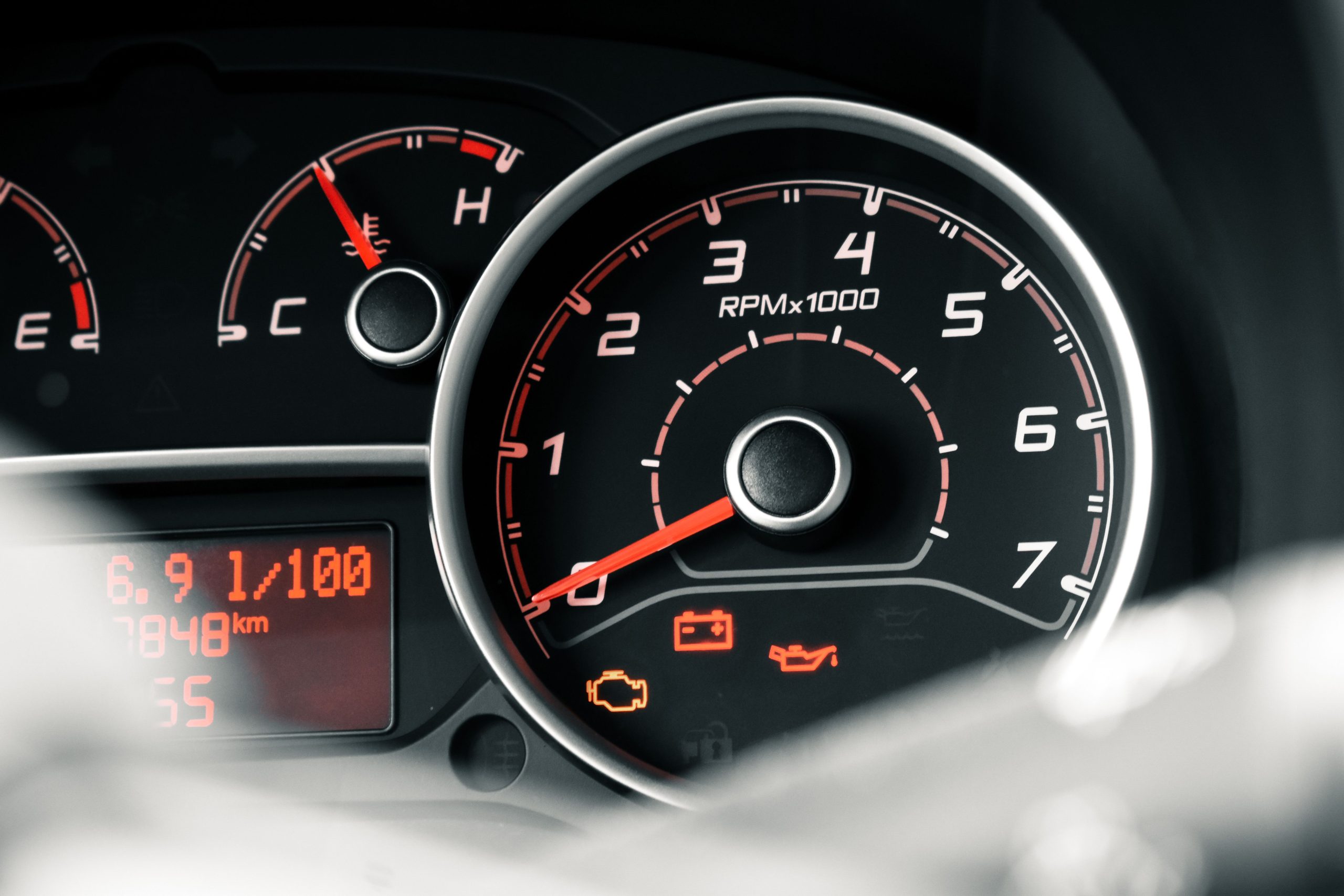
You’ll typically notice traction control working through a flickering dashboard light and a slight reduction in acceleration — the car pulling back power on its own is the system doing exactly what it’s designed to do, not a malfunction.
Frequently Asked Questions
Can I turn traction control off, and should I?
Most vehicles allow it, usually intended for specific situations like rocking a car out of deep snow or mud where wheelspin is actually needed to build momentum. For everyday driving, leaving it on is the safer default in nearly every situation.
Does traction control work the same on all-wheel-drive vehicles?
The underlying detection and correction logic is the same, but AWD systems often have additional mechanical grip advantages that reduce how often traction control needs to intervene in the first place, compared to a two-wheel-drive vehicle in the same conditions.
Why does my traction control light stay on?
A light that flashes briefly during a slip event is normal. A light that stays on constantly usually indicates a fault in the system itself — often a wheel speed sensor issue — and is worth having diagnosed, since a malfunctioning sensor can affect ABS and stability control too, given the shared hardware. If the issue is paired with an unusual noise, our guide on grinding noise while driving covers a related set of wheel-area symptoms worth ruling out.
Is traction control a feature I should look for when buying a car?
It’s been federally mandated on new U.S. vehicles for years now, so virtually every car you’d consider already has it standard. If you’re shopping for a used vehicle from before that mandate, it’s worth confirming rather than assuming — see our guide on the best time to buy a car for broader shopping strategy.
The Bottom Line
Traction control uses wheel speed sensors to catch a drive wheel spinning faster than it should, then corrects it by cutting engine power and braking that specific wheel until grip returns. It’s the acceleration counterpart to ABS’s braking protection, and both feed into the more advanced stability control system — together, they’re the layered safety net that keeps a car pointed the direction the driver intends, especially on wet, icy, or loose surfaces.
Traction control light staying on, or dealing with a related brake or wheel issue? Contact San Diego Bumper and Collision for a proper diagnostic.